Modern computing demands unprecedented parallelism to power applications ranging from artificial intelligence to real-time graphics rendering. At the heart of this revolution lie CUDA cores—NVIDIA’s specialized processing units designed to execute thousands of computational threads simultaneously. Since their introduction in 2006, CUDA cores have evolved into the backbone of GPU-accelerated computing, enabling breakthroughs in fields like deep learning, climate modeling, and autonomous vehicle development. This guide explores their architecture, functionality, and optimization strategies, while highlighting how cloud solutions like Novita AI simplify access to cutting-edge GPU resources.
What Are CUDA Cores?
CUDA cores are the basic building blocks of NVIDIA GPUs that perform parallel processing tasks. The term “CUDA” stands for Compute Unified Device Architecture, which is NVIDIA’s parallel computing architecture designed to harness the processing power of the GPU for general-purpose computing tasks.
CUDA cores are designed to execute thousands of threads simultaneously, making them ideal for parallel workloads. Unlike CPUs, which typically have a few cores optimized for sequential processing, GPUs with CUDA cores can handle massive amounts of data and computations in parallel, providing the processing power needed for modern workloads such as machine learning, 3D rendering, and scientific simulations.
Key Differences from CPU Cores:
- Parallel Throughput: A high-end GPU like the NVIDIA RTX 4090 contains 16,384 CUDA cores, whereas even flagship CPUs rarely exceed 128 cores.
- Task Specialization: CPU cores handle diverse workloads (e.g., file I/O, system tasks), while CUDA cores focus on floating-point and integer operations critical for parallelizable tasks.
- Memory Architecture: CUDA cores access a hierarchy of memory spaces (registers, shared, global) tailored for rapid data retrieval, unlike CPU caches designed for latency-sensitive workloads.
How CUDA Cores Work
CUDA Architecture and Parallel Processing
The heart of CUDA core operation lies in its architecture. CUDA cores are designed to handle parallel execution, meaning they can process many tasks at the same time. This is a sharp contrast to traditional CPUs, which typically handle tasks sequentially. CUDA-enabled GPUs consist of thousands of cores that work together in parallel to process large amounts of data. This is crucial in high-performance computing tasks where time is of the essence, such as AI model training or real-time video rendering.
SIMD Execution and Thread Management
One key feature of CUDA cores is their use of SIMD (Single Instruction, Multiple Data) execution. This means that a single instruction can be applied to multiple pieces of data simultaneously, making processing more efficient. CUDA cores are organized into blocks and threads, where each thread performs the same operation on different data elements. This organizational structure enables CUDA cores to handle massive datasets quickly and efficiently by utilizing parallelism.
Memory Hierarchy and Access Patterns
Another critical factor in the performance of CUDA cores is how they handle memory. CUDA cores utilize a hierarchy of memory resources to optimize access speed and bandwidth. This includes global memory, shared memory, and registers, each of which serves a different purpose in ensuring quick data retrieval and storage. Efficient memory access patterns, such as minimizing latency and maximizing throughput, are essential for getting the most out of CUDA cores, especially in high-demand computational scenarios.
CUDA Cores vs Tensor Cores: Key Differences
While both CUDA Cores and Tensor Cores are used for parallel computing, they are optimized for different types of tasks.
| Feature | CUDA Cores | Tensor Cores |
|---|---|---|
| Purpose | General-purpose computing | Specialized for matrix-heavy AI computations |
| Precision Support | FP32, FP64 | Mixed precision (FP16, INT8, FP4) |
| Performance Speed | High for diverse workloads | 30x faster for matrix-heavy tasks like AI |
| Applications | Gaming, video editing, scientific simulations | Neural network training, AI inference |
CUDA Cores and Tensor Cores comparison details can be found at this website: CUDA Cores and Tensor Cores comparison details can be found at this website.
Applications of CUDA Cores in Real-World Scenarios
Deep Learning
In deep learning, CUDA cores accelerate the training of neural networks by performing matrix multiplications and other operations in parallel. This capability allows researchers to train models on large datasets much faster than traditional CPUs would permit.
3D Rendering
CUDA cores play a vital role in 3D rendering applications by handling complex calculations related to lighting, shading, and texture mapping simultaneously. This leads to smoother graphics and enhanced visual fidelity in games and simulations.
Scientific Computation and Simulations
CUDA cores are widely used in scientific research for simulations that require intensive calculations, such as climate modeling or molecular dynamics simulations. Their ability to process vast amounts of data quickly makes them indispensable in these fields.
Cloud GPUs: A Scalable Solution for High-Performance Computing
As organizations increasingly rely on high-performance computing (HPC), cloud GPUs offer a flexible solution that eliminates the need for extensive on-premises infrastructure. Cloud service providers allow users to access powerful GPU resources on-demand:
- Scalability: Easily scale computing resources based on workload demands without upfront capital investment.
- Cost Efficiency: Pay only for what you use with flexible pricing models.
- Accessibility: Access cutting-edge GPU technology without the need for physical hardware maintenance.
Choosing Novita AI as Your Cloud GPU Provider
When it comes to cloud GPU services, Novita AI stands out as an exceptional provider. With access to GPUs like the NVIDIA H100 and RTX 4090, Novita AI offers the perfect solution for those looking to leverage CUDA cores for various applications, including deep learning, 3D rendering, and scientific simulations. Learn more about how Novita AI’s powerful infrastructure can help optimize your performance needs.
If you’re interested in Novita AI, please refer to the following steps.
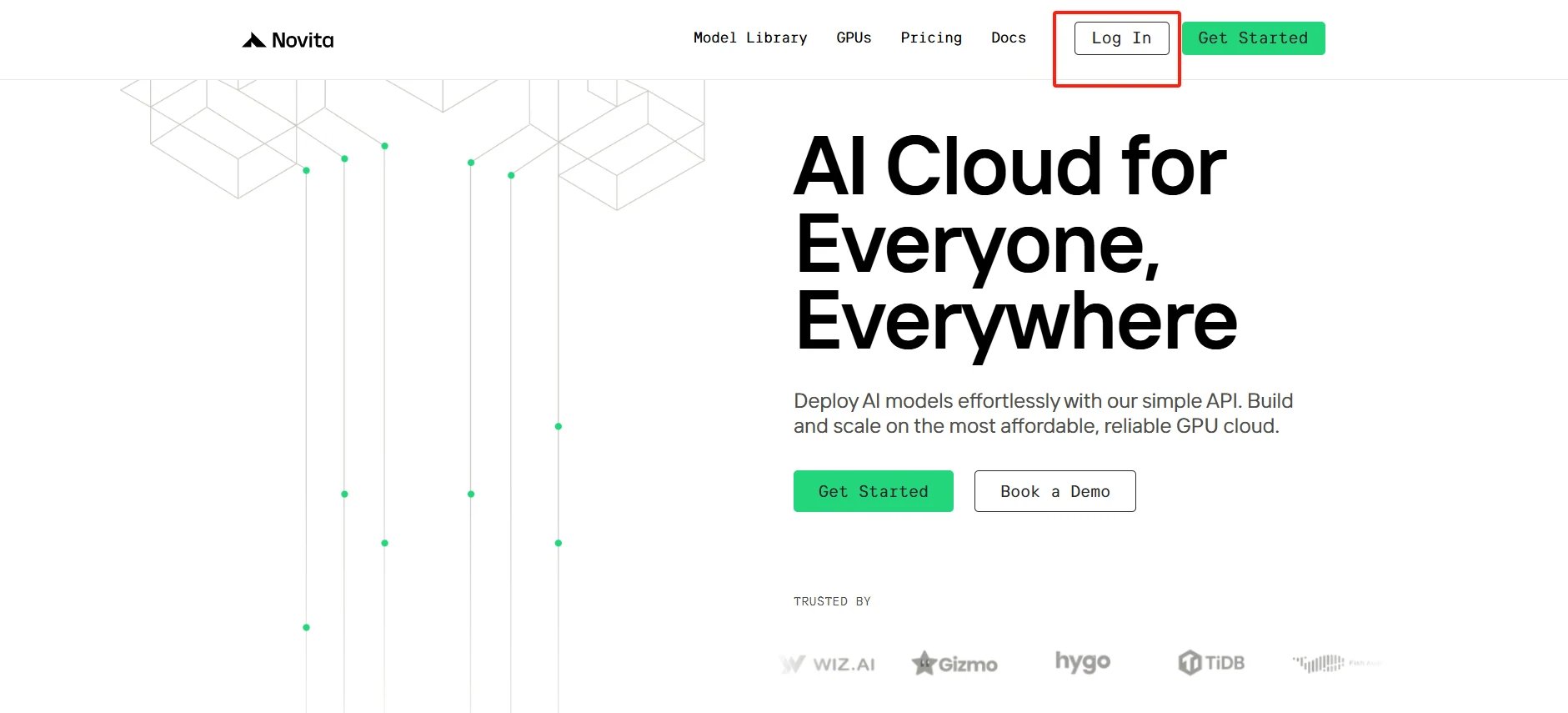
Step1:Create an account
Ready to get started? Sign up on the Novita AI platform in just a few minutes. After logging in, navigate to the ‘GPUs’ section to browse available instances, compare specs, and select the plan that best suits your needs. With our intuitive interface, you can quickly deploy your first GPU instance and accelerate your AI development.
[Try using Novita AI now](https://novita.ai/?utm_source=blogs_GPU&utm_medium=article&utm_campaign=What Are CUDA Cores? A Deep Dive Into GPU Parallel Processing)
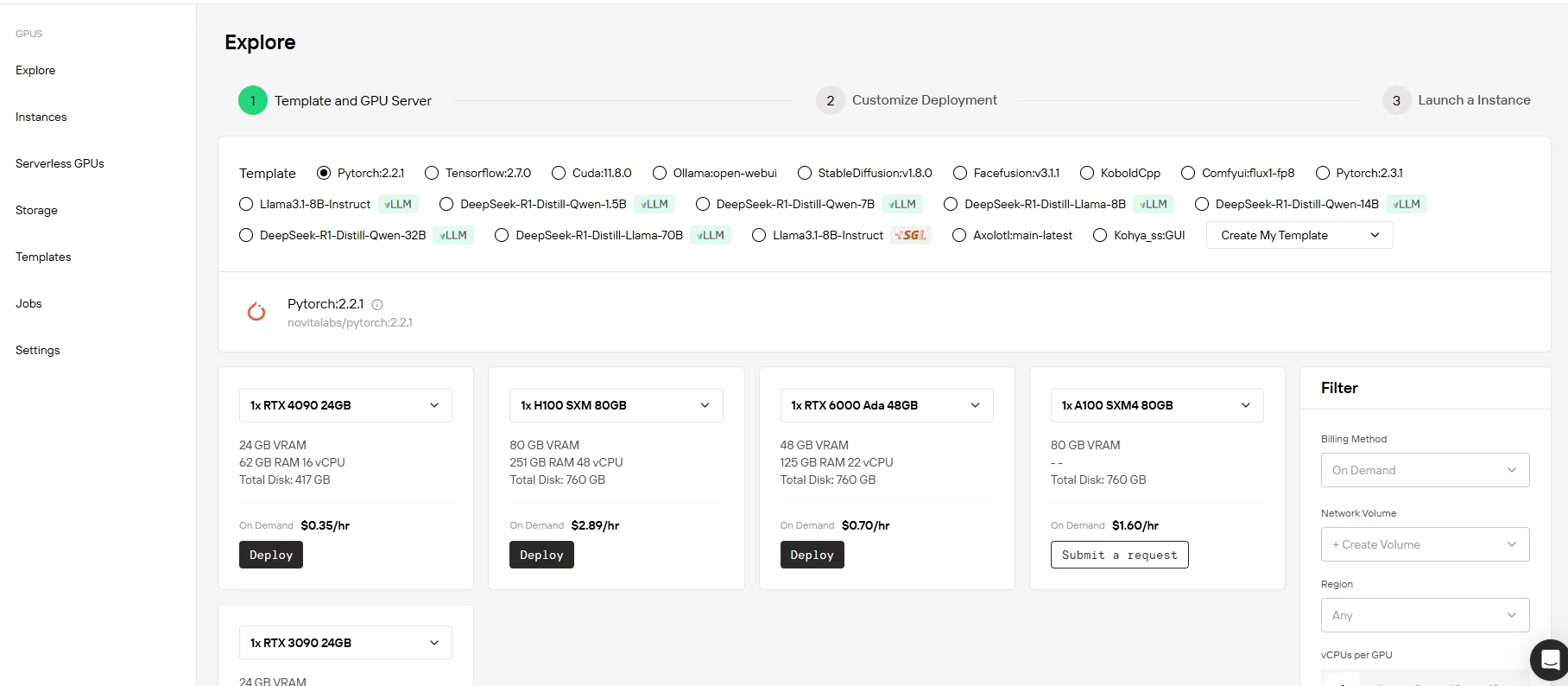
Step2:Select Your GPU
Our platform provides a diverse selection of professionally crafted templates tailored to your specific needs, along with the flexibility to design custom solutions from the ground up. Powered by state-of-the-art GPUs like the NVIDIA H100, with abundant VRAM and RAM, we ensure fast, smooth, and efficient training for even the most complex AI models.
[Try Novita AI’s High-Performance GPUs](https://novita.ai/gpus-console/?utm_source=blogs_GPU&utm_medium=article&utm_campaign=What Are CUDA Cores? A Deep Dive Into GPU Parallel Processing)
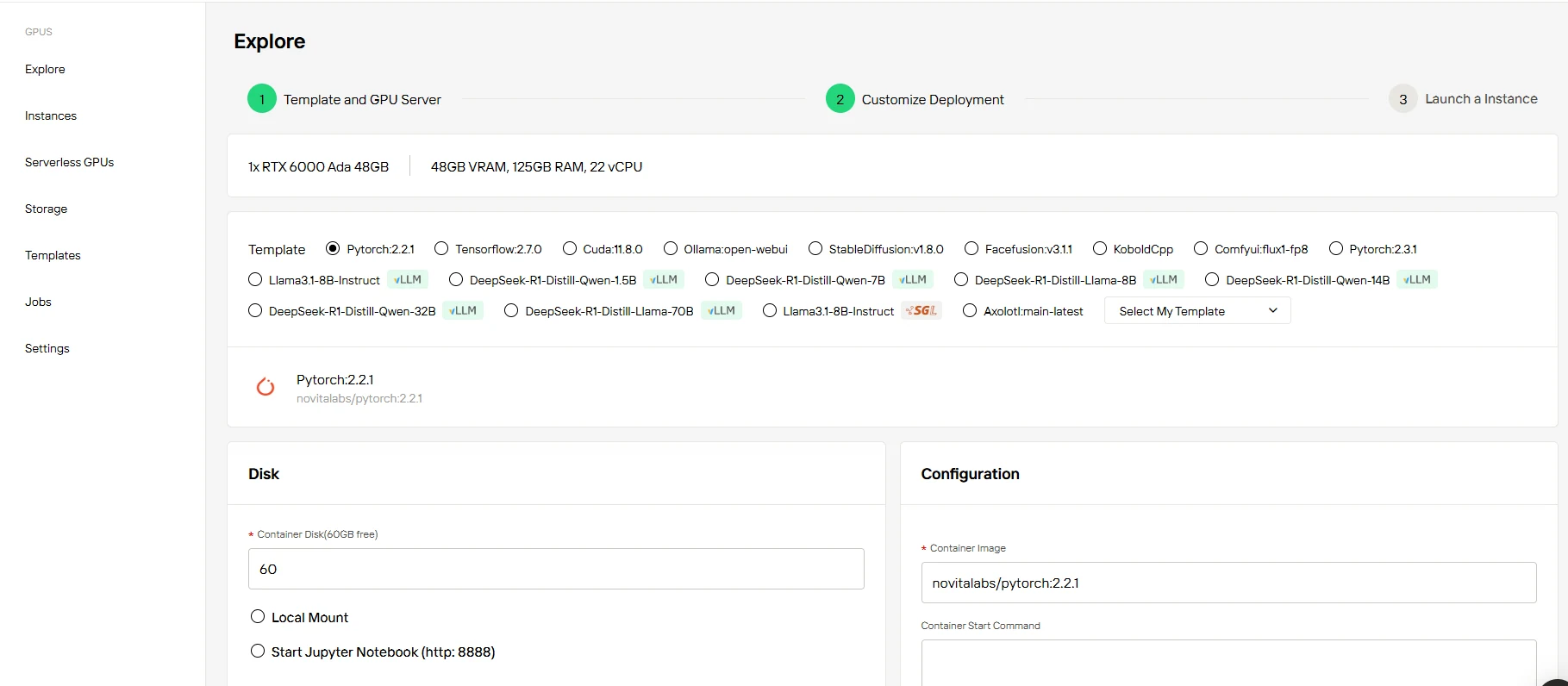
Step3:Customize Your Setup
Enjoy adaptable storage solutions designed to fit your needs, starting with 60GB of complimentary Container Disk space. Effortlessly scale with pay-as-you-go options or subscription plans that match your workflow and budget. Whether you’re in the early development stages or deploying at scale, our dynamic storage ensures seamless expansion with instant provisioning whenever you need extra capacity.
Step4:Launch Your Instance
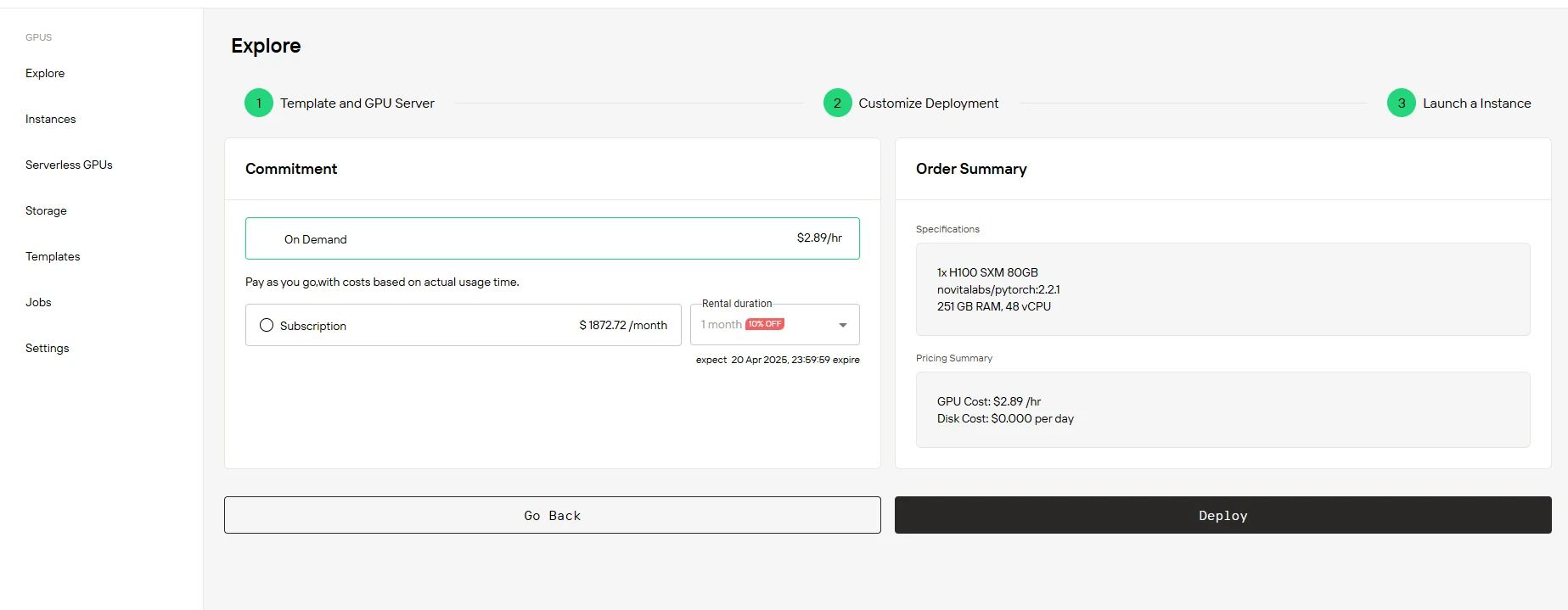
Choose the pricing model that suits you best—On Demand for flexibility or Subscription for maximum savings. Review your instance specifications and cost summary, then launch instantly with a single click. Your high-performance GPU environment will be ready immediately, ensuring you can start your work without any delays.
Conclusion
CUDA cores are essential components of modern GPUs that enable efficient parallel processing across various applications. Understanding how they work and optimizing their use can lead to significant performance improvements in computational tasks. As technology continues to evolve, leveraging cloud solutions like Novita AI will provide organizations with the flexibility needed to stay competitive in an increasingly data-driven world. The future of computing lies in harnessing the full potential of these powerful processing units.
Frequently Asked Questions
Are CUDA cores in the latest GPUs more powerful than in older models?
Yes, newer generations of GPUs typically have more CUDA cores and improved performance per core. This increase in processing power, along with advancements in memory and architecture, results in faster processing for demanding tasks such as deep learning and large-scale simulations.
Do I need programming skills to use CUDA cores?
Yes, to fully utilize CUDA cores, you’ll need to have some knowledge of parallel programming and CUDA programming. However, there are many resources, including tutorials and libraries like cuDNN, which can help you get started with minimal programming experience.
What industries benefit the most from using CUDA cores?
Industries such as artificial intelligence, gaming, healthcare (medical imaging), scientific research (simulations), and video production (3D rendering) benefit greatly from CUDA cores due to their ability to perform parallel computations quickly and efficiently.
[Novita AI](https://novita.ai/?utm_source=blogs_GPU&utm_medium=article&utm_campaign=What Are CUDA Cores? A Deep Dive Into GPU Parallel Processing) is an AI cloud platform that offers developers an easy way to deploy AI models using our simple API, while also providing the affordable and reliable GPU cloud for building and scaling.
Recommended Reading
CUDA 12: Optimizing Performance for GPU Computing