Key Highlights
Architecture Differences
DeepSeek V3 employs MoE dynamic routing (37B/671B parameters activated on demand) while GPT-4o uses dense full-parameter computation.
Cost Advantage
DeepSeek V3’s output cost is only 11% of GPT-4o’s ($1.1 vs. $10 per million tokens).
Latency and Throughput
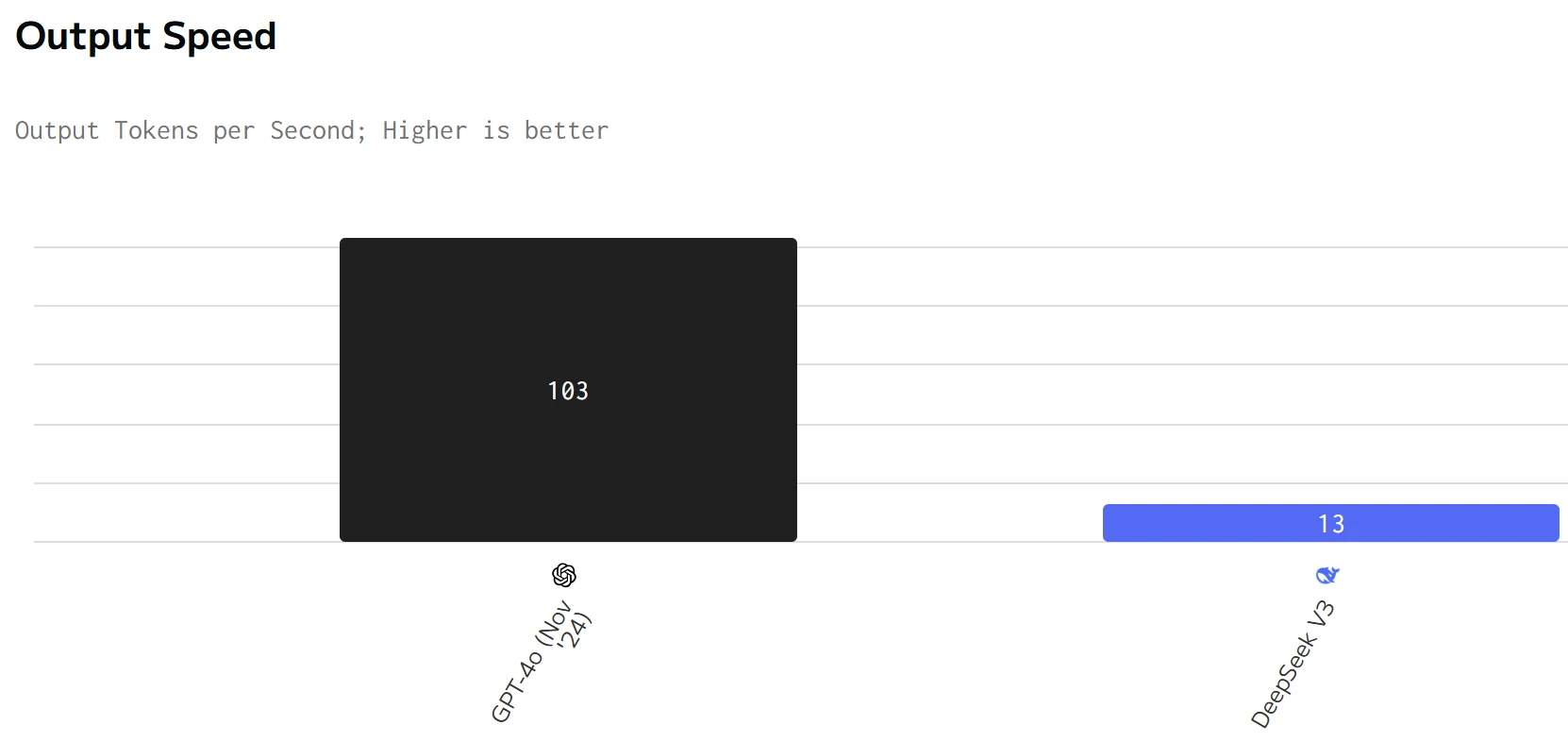
Latency: GPT-4o has 27.7% lower first token latency (0.73s vs. 1.01s).
Throughput: DeepSeek V3 achieves 56.7% higher throughput (1536 vs. 980 tokens/s per H100).
Use Case Suitability
DeepSeek V3: Optimized for technical tasks (coding/math).
GPT-4o: Excels at general conversation and creative content.
If you’re looking to evaluate the DeepSeek V3 on your own use-cases — Upon registration, Novita AI provides a $0.5 credit to get you started!
DeepSeek V3 and GPT-4o represent cutting-edge advancements in AI, yet they differ significantly in their architectures, strengths, and applications. This article offers a practical, informational, and technical comparison of these two models. It covers their core differences, performance benchmarks, cost and speed considerations, hardware requirements, and ideal use cases. This guide is designed to help developers and researchers make informed decisions about which model is best suited for their needs.
Basic Introduction of Model
To begin our comparison, we first understand the fundamental characteristics of each model.
DeepSeek V3
- Release Date: December 27, 2024
- Model Scale:
- Key Features:
- Model Size: 671B parameters (37B active/token)
- Tokenizer: SentencePiece-based multilingual tokenizer
- Supported Languages: Focused on Chinese, English, and Japanese
- Multimodal: Text-only
- Context Window: 128K tokens
- Storage Formats: FP8/BF16 inference
- Architecture: Mixture of Experts (MoE) + Multi-Head Latent Attention
- Training Method: Pre-training → Supervised Fine-Tuning (SFT) → Reinforcement Learning (RL)
- Training Data: 14.8T tokens for pre-training
GPT-4o
- Release Date: May 13, 2024
- Key Features:
- Dense model architecture, using all parameters for every task.
- Multimodal capabilities.
- Superior conversational AI and natural language processing capabilities.
- Designed for broad general-purpose applications.
Key Difference of Models
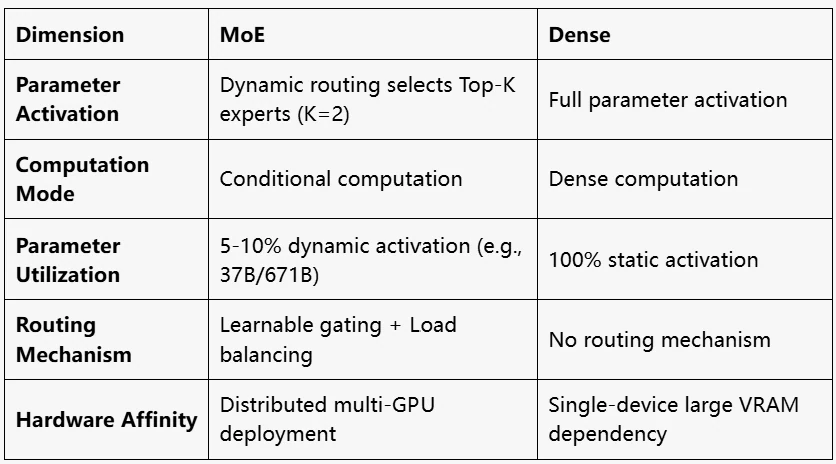
From a technical standpoint, MoE achieves exponential efficiency gains through conditional computation, but it requires a supporting distributed system and domain expert design. Dense, on the other hand, relies on economies of scale to achieve general intelligence but faces the power wall imposed by physical laws. Both will coexist in different scenarios for the long term.
Besides, DeepSeek V3 employs reinforcement learning techniques in its subsequent training stages, further enhancing its capabilities in reasoning-intensive tasks such as mathematics, coding, and logical reasoning. This application of reinforcement learning enables DeepSeek V3 to perform well in empirical benchmarks, reaching a level comparable to strictly closed-source models.
Speed Comparison
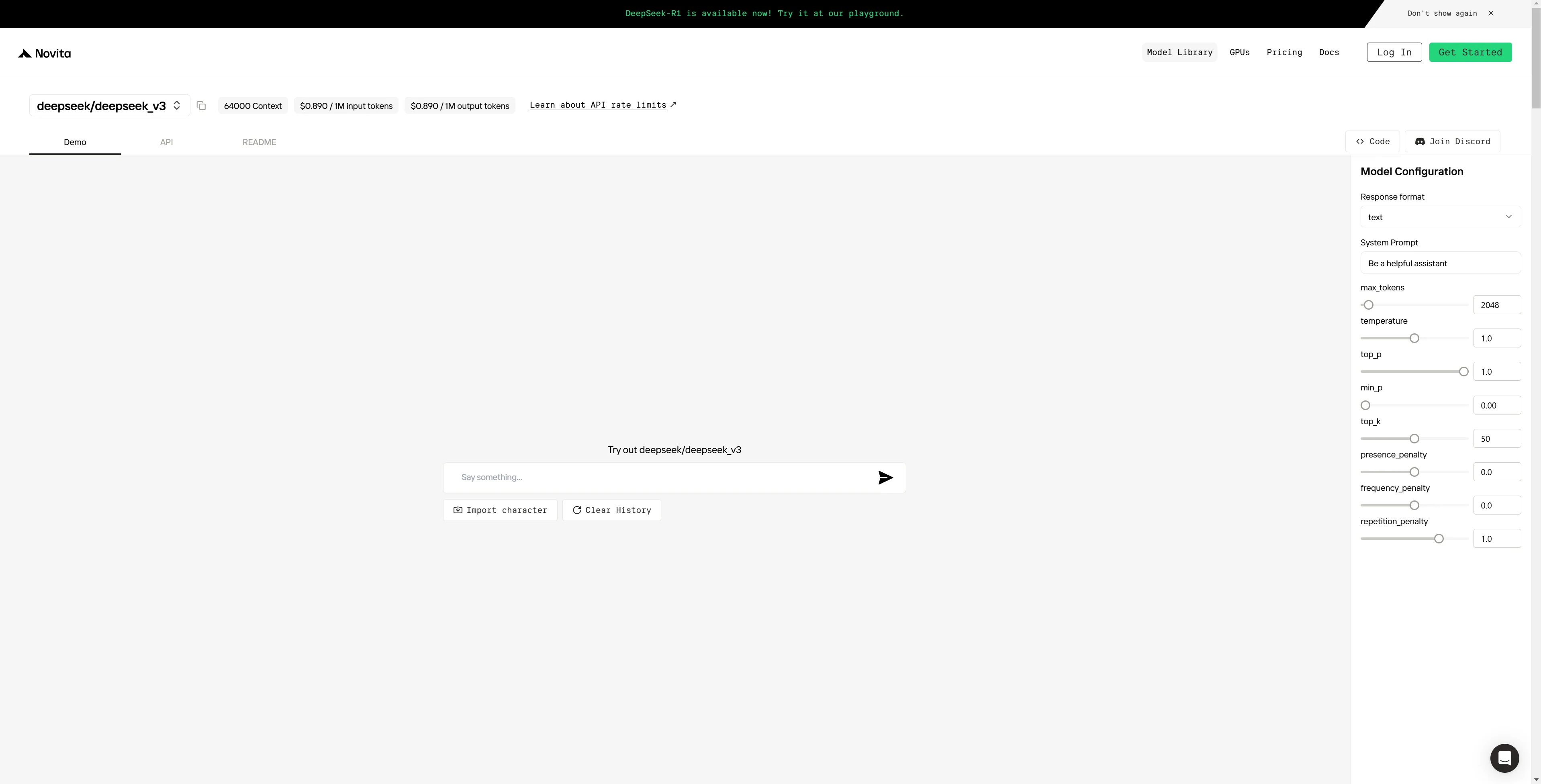
If you want to test it yourself, you can start a free trial on the Novita AI website.
Speed Comparison
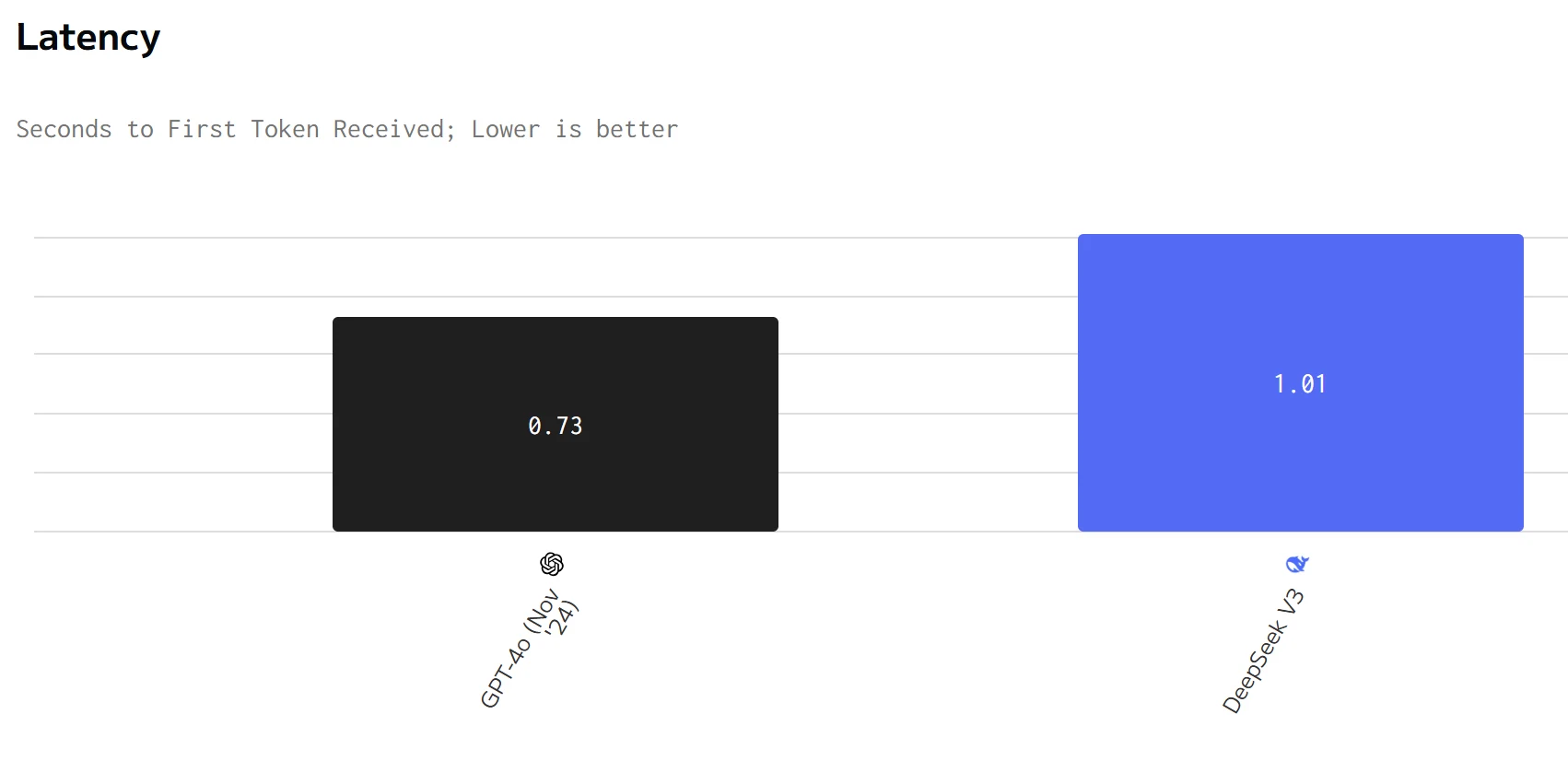
source from artificialanalysis
Cost Comparison
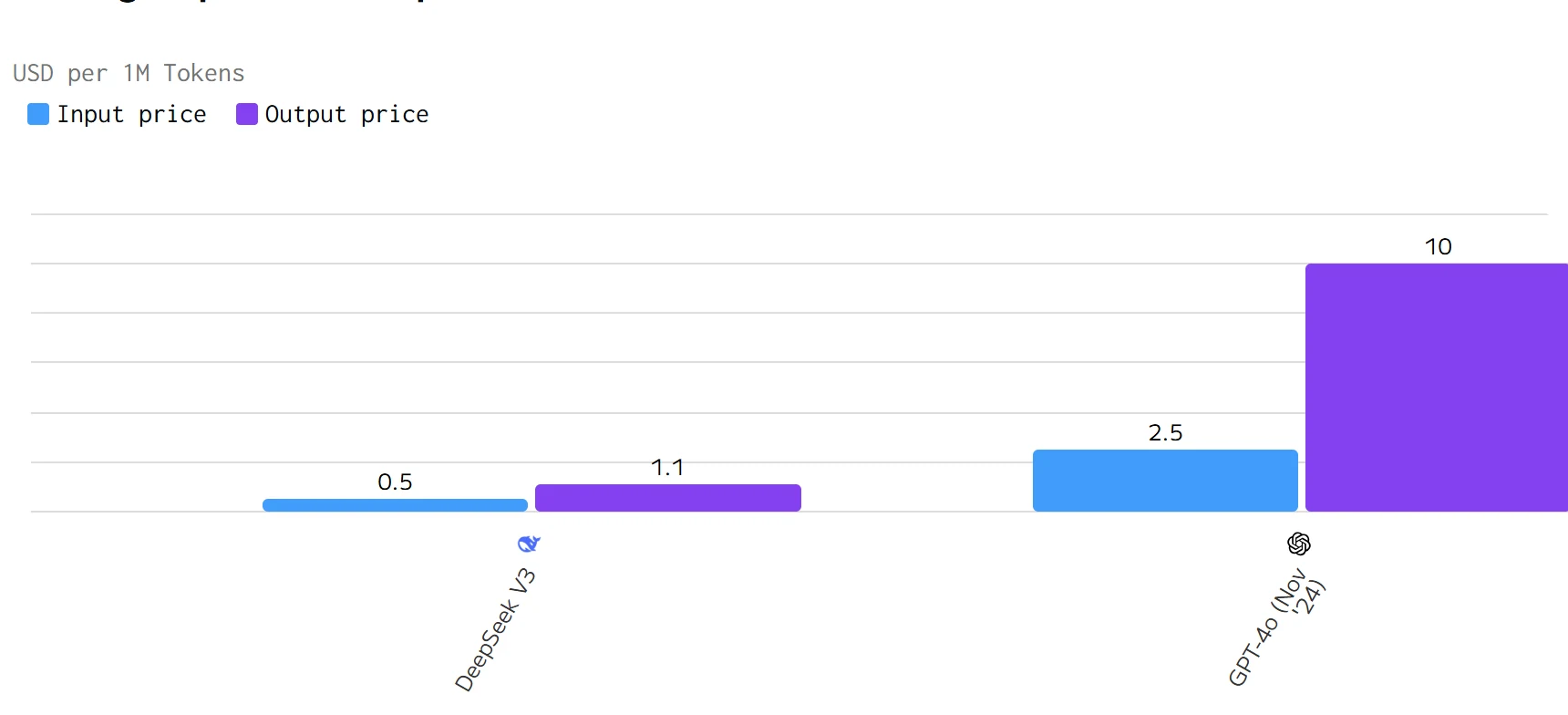
source from artificialanalysis
- Real-time priority: Choose GPT-4.0 (low latency + high throughput)
- Cost-sensitive scenarios: Choose DeepSeek V3 (89% cost savings)
Benchmark Comparison
Now that we’ve established the basic characteristics of each model, let’s delve into their performance across various benchmarks. This comparison will help illustrate their strengths in different areas.
| Benchmark | DeepSeek-V3 (%) | GPT-4O (%) |
|---|---|---|
| Codeforces | 51.6 | / |
| GPQA Diamond | 59.1 | 53.6 |
| MATH-500 | 90.2 | 76.6 |
| MMLU | 75.9 | 88.7 |
These data indicate that both DeepSeek-R1 and OpenAI-o1 are high-performing models, but they excel in different areas:
- DeepSeek: Likely employs MoE (Mixture of Experts) + domain-specific fine-tuning to enhance mathematical and coding capabilities.
- GPT-4O: Relies on a dense architecture + broad corpus to achieve general-purpose performance.
Applications and Use Cases
DeepSeek V3 Technical Application Scenarios
Software Development and Automation
- CI/CD Integration: Automated code reviews and test case generation.
- DevOps Enhancement: Intelligent optimization of Ansible/Puppet scripts.
- Low-Code Development: Generate React/Django components using natural language.
Complex Reasoning Tasks
-
Mathematical Proofs:
- Lean4 formal verification (90.2% accuracy on MATH-500).
- Symbolic computation (optimized SymPy interface).
-
Code Generation:
- Competitive algorithm implementation (51.6% pass rate on Codeforces).
- Vulnerability pattern recognition (enhanced training with CVE database).
Synthetic Data Engineering
-
Domain Data Augmentation:
- Generate ISO 26262-compliant test cases for autonomous driving.
- Create noisy mathematical training sets (to combat overfitting).
-
Knowledge Distillation:
- Produce lightweight expert models (<1B parameters).
GPT-4 General Application Scenarios
Customer Support System
- Multimodal Dialogue: Voice and text hybrid interaction with a Word Error Rate (WER) of less than 5%.
- Emotion Recognition: Enhanced with BERT-style embedding.
- Work Order Categorization: Automatic labeling system based on BERTopic.
- SLA Forecasting Model: Time series analysis for predicting Service Level Agreements.
Content Creation Engine
- A/B Testing Optimization: Generated over 200 variations of ad copy, resulting in an 18% increase in Click-Through Rate (CTR).
- Multilingual SEO Content Production: Supports 57 languages.
- Script Generation: Maintains structural consistency for three-act dramas using LSTM timing control.
Generalized Dialogue System
- Knowledge Graph Integration: Real-time search enhancement with Wikidata.
- Multi-Hop Inference: Processing similar to GrailQA.
- Ethical Constraints: Constitutional AI rules engine.
- Bias Detection: Analysis using SHAP values.
Accessibility and Deployment through Novita AI
Novita AI is an AI cloud platform that offers developers an easy way to deploy AI models using our simple API, while also providing the affordable and reliable GPU cloud for building and scaling.
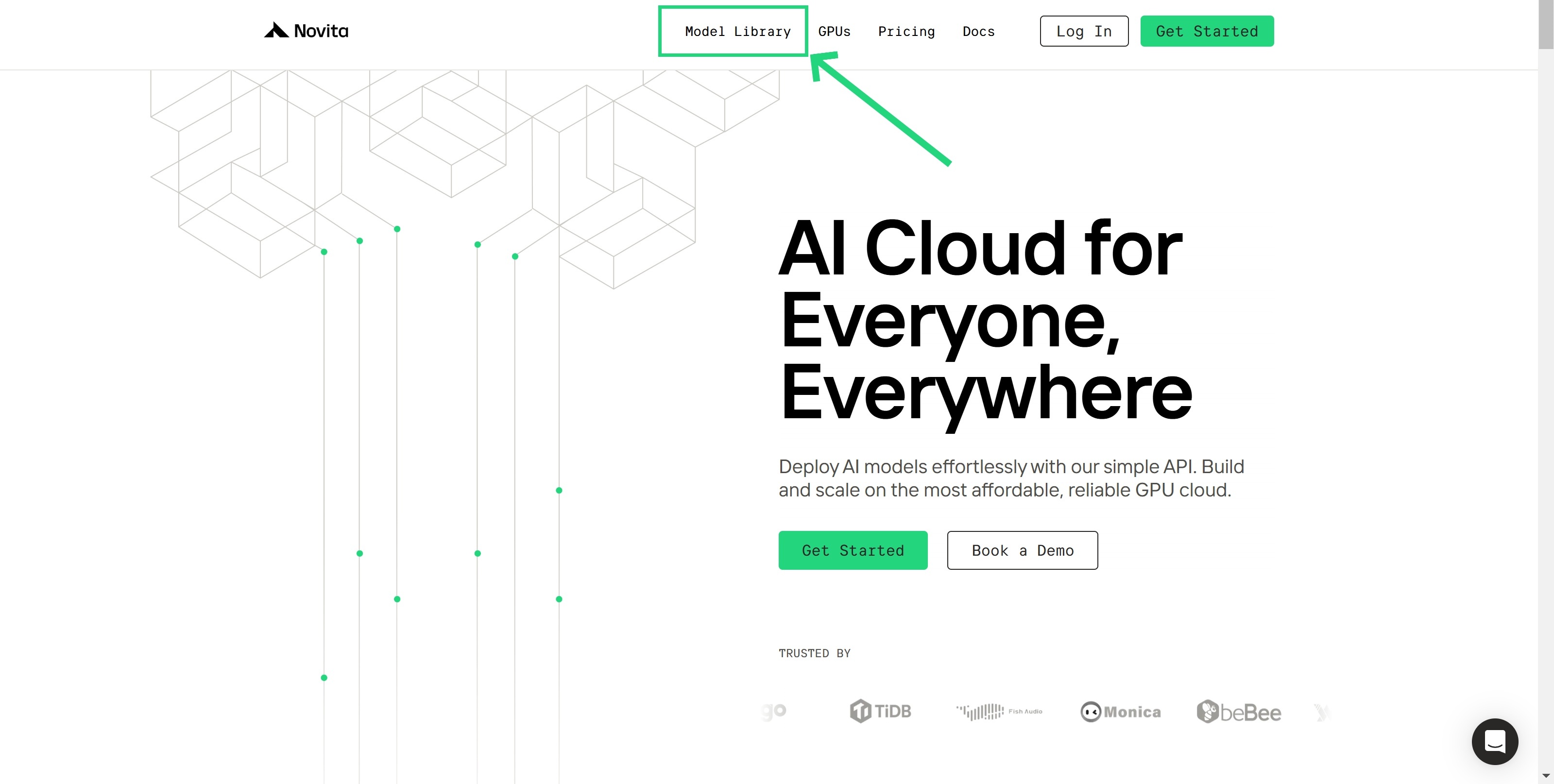
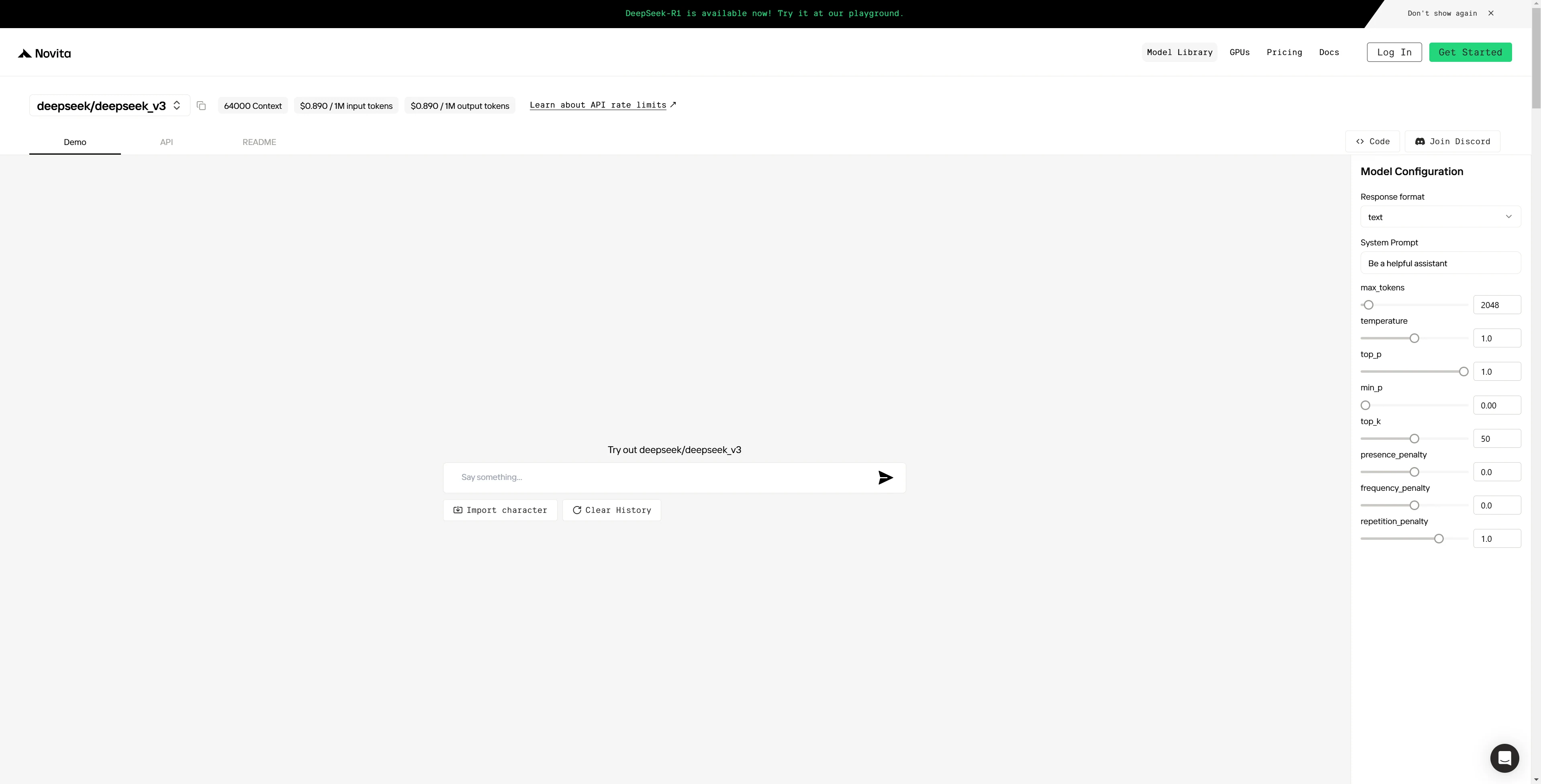
Step 1: Log In and Access the Model Library
Log in to your account and click on the Model Library button.
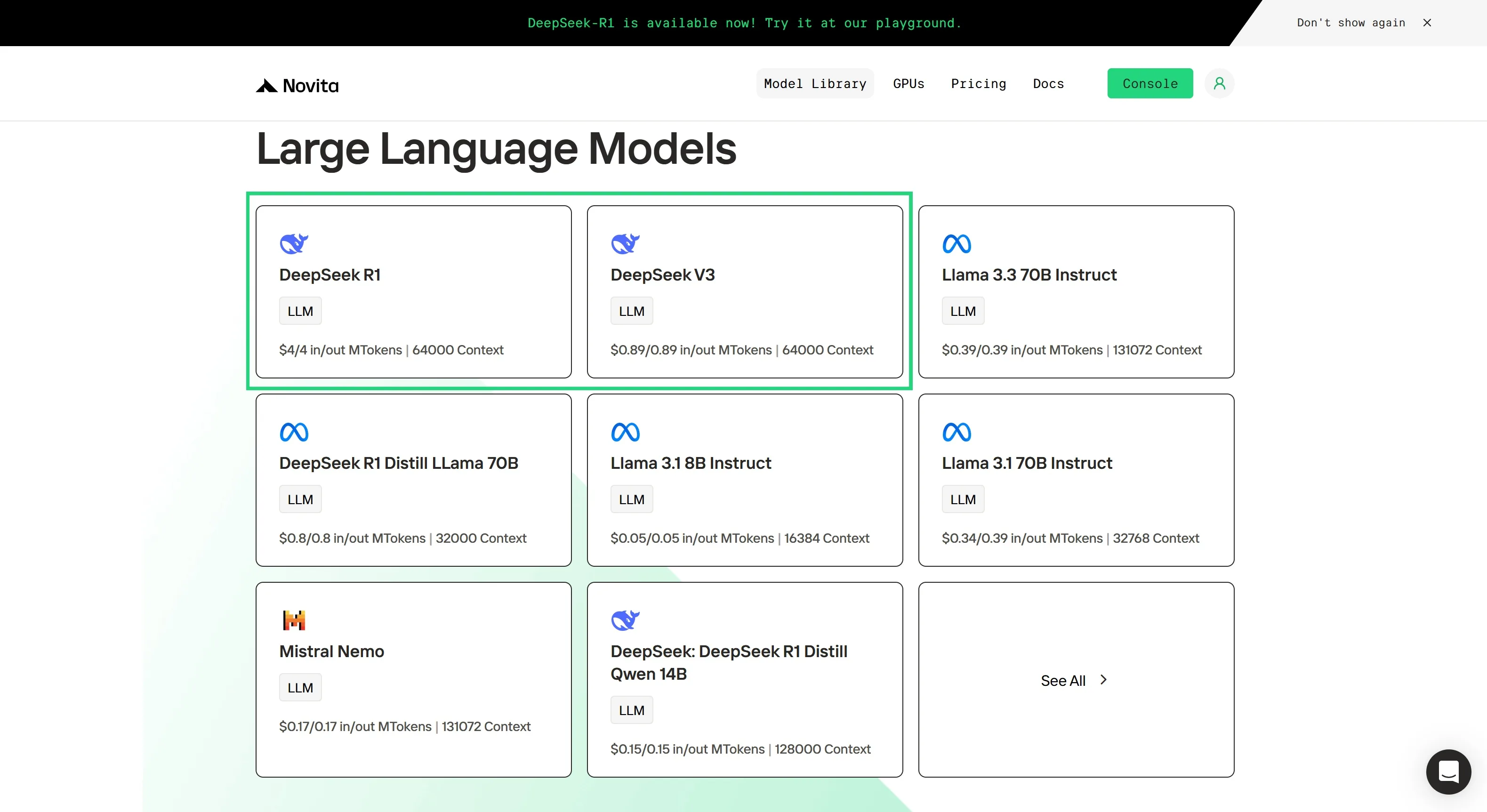
Step 2: Choose Your Model
Browse through the available options and select the model that suits your needs.
Step 3: Start Your Free Trial
Begin your free trial to explore the capabilities of the selected model.
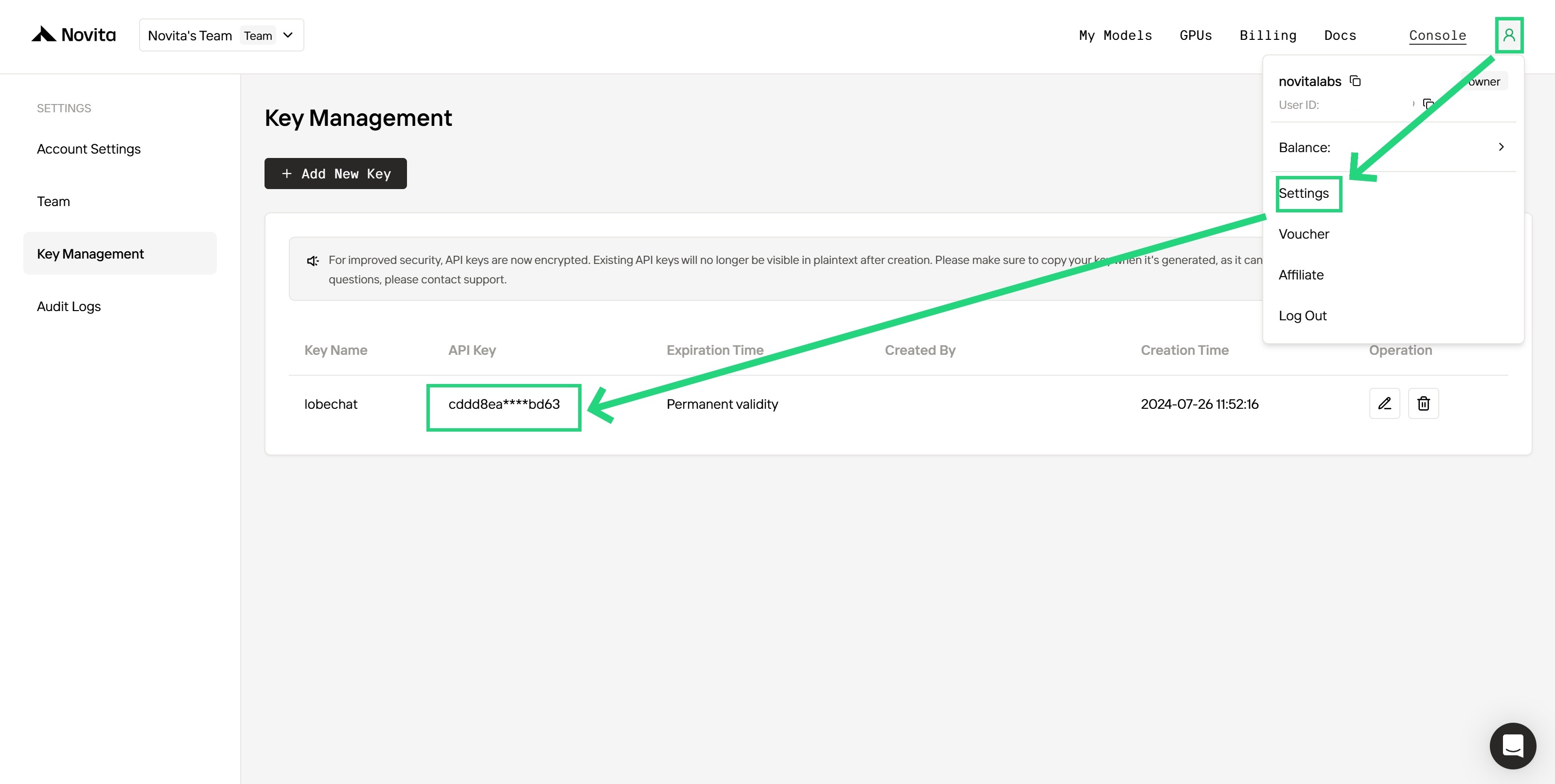
Step 4: Get Your API Key
To authenticate with the API, we will provide you with a new API key. Entering the “Settings“ page, you can copy the API key as indicated in the image.
Step 5: Install the API
Install API using the package manager specific to your programming language.
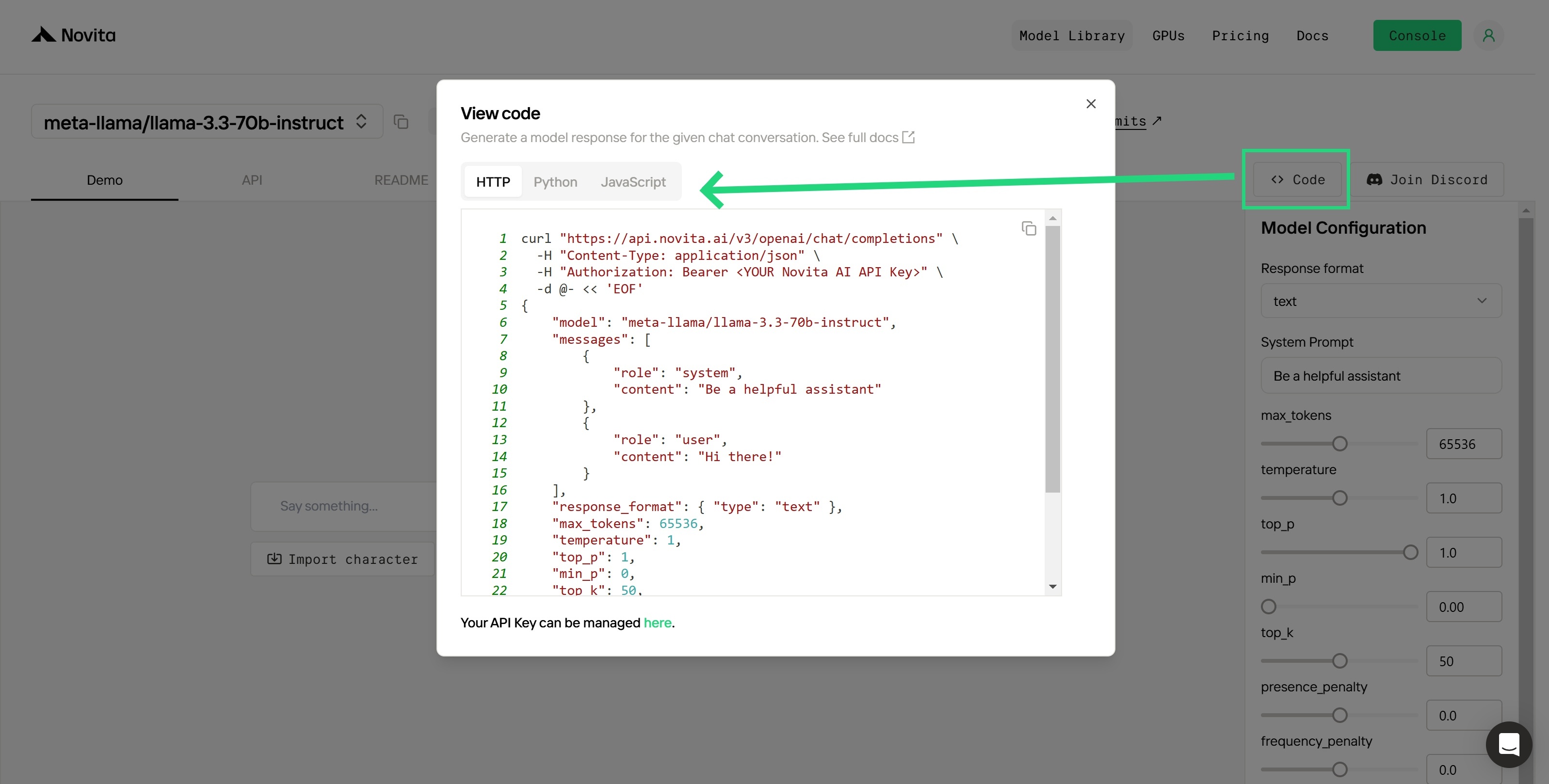
After installation, import the necessary libraries into your development environment. Initialize the API with your API key to start interacting with Novita AI LLM. This is an example of using chat completions API for python users.
from openai import OpenAI
client = OpenAI(
base_url="https://api.novita.ai/v3/openai",
api_key="<YOUR Novita AI API Key>",
)
model = "deepseek/deepseek_V3"
stream = True # or False
max_tokens = 2048
system_content = """Be a helpful assistant"""
temperature = 1
top_p = 1
min_p = 0
top_k = 50
presence_penalty = 0
frequency_penalty = 0
repetition_penalty = 1
response_format = { "type": "text" }
chat_completion_res = client.chat.completions.create(
model=model,
messages=[
{
"role": "system",
"content": system_content,
},
{
"role": "user",
"content": "Hi there!",
}
],
stream=stream,
max_tokens=max_tokens,
temperature=temperature,
top_p=top_p,
presence_penalty=presence_penalty,
frequency_penalty=frequency_penalty,
response_format=response_format,
extra_body={
"top_k": top_k,
"repetition_penalty": repetition_penalty,
"min_p": min_p
}
)
if stream:
for chunk in chat_completion_res:
print(chunk.choices[0].delta.content or "", end="")
else:
print(chat_completion_res.choices[0].message.content)
Upon registration, Novita AI provides a $0.5 credit to get you started!
If the free credits is used up, you can pay to continue using it.
DeepSeek V3 and GPT-4o are both powerful AI models with distinct strengths and weaknesses. DeepSeek V3 excels in technical domains with its efficient architecture and is a strong choice for developers focused on cost-effectiveness and customization. GPT-4o offers superior conversational abilities and broader application versatility, making it suitable for businesses seeking enterprise-ready solutions. The choice between the two will depend on the specific requirements and resources of each use case.
Frequently Asked Questions
What is the main difference in architecture between DeepSeek V3 and GPT-4o?
DeepSeek V3 uses a Mixture-of-Experts (MoE) architecture, while GPT-4o uses a dense transformer architecture.
Which model is more cost-effective?
DeepSeek V3 is significantly more cost-effective in terms of both training and operational expenses.
Which model is better for natural language tasks?
GPT-4o is generally better for natural language processing and conversational AI due to its design for a wide variety of tasks.
Novita AI is the All-in-one cloud platform that empowers your AI ambitions. Integrated APIs, serverless, GPU Instance — the cost-effective tools you need. Eliminate infrastructure, start free, and make your AI vision a reality.