Key Highlights
Architectural Distinction: DeepSeek R1’s Mixture-of-Experts (MoE) design optimizes performance for logic-heavy tasks, while Claude 3.5’s proprietary architecture prioritizes versatility and multilingual capabilities.
Task Specialization: DeepSeek R1 excels in programming (96.3% Codeforces) and math (79.8% AIME), whereas Claude 3.5 shines in multilingual comprehension, visual reasoning, and broader conversational contexts.
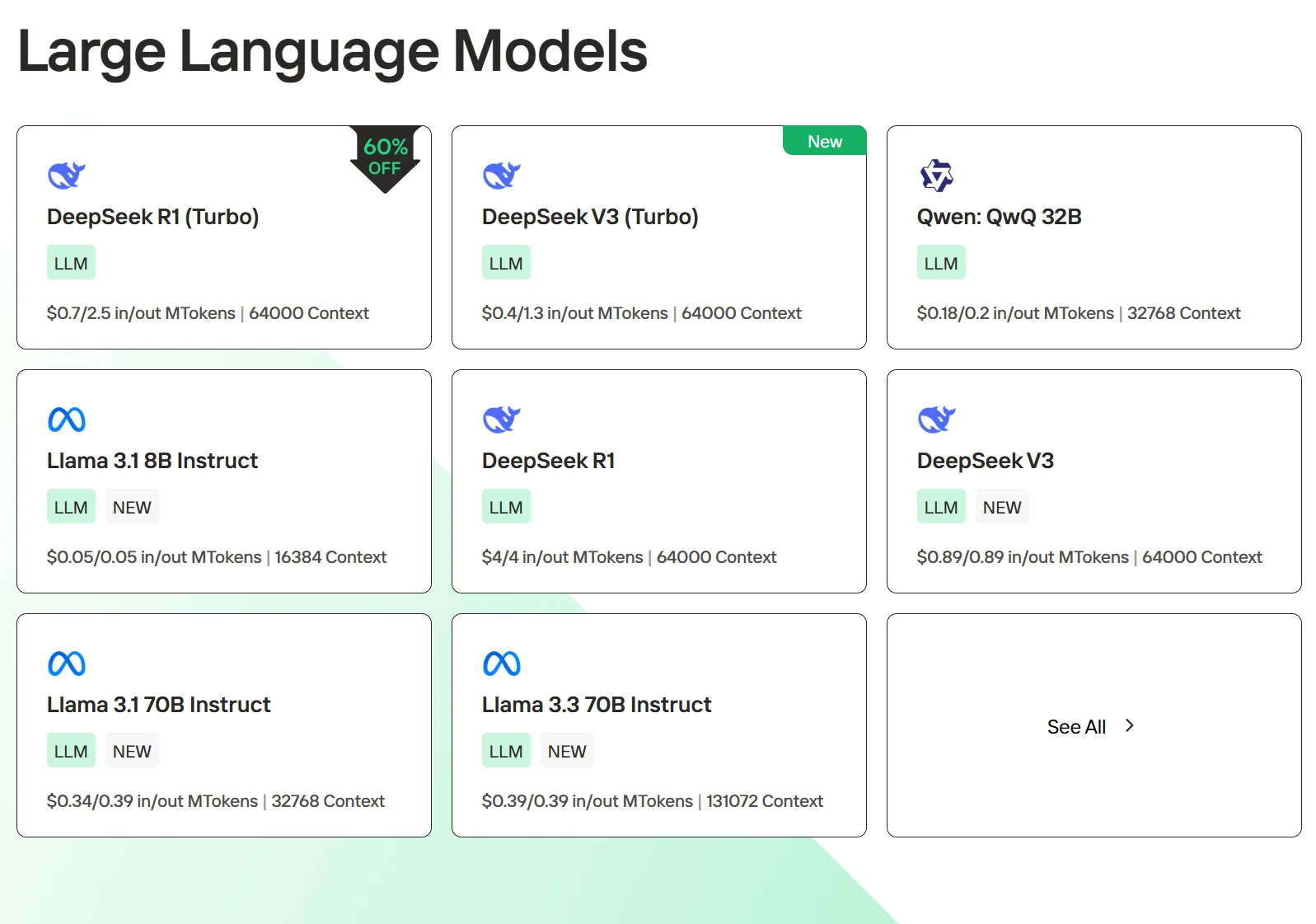
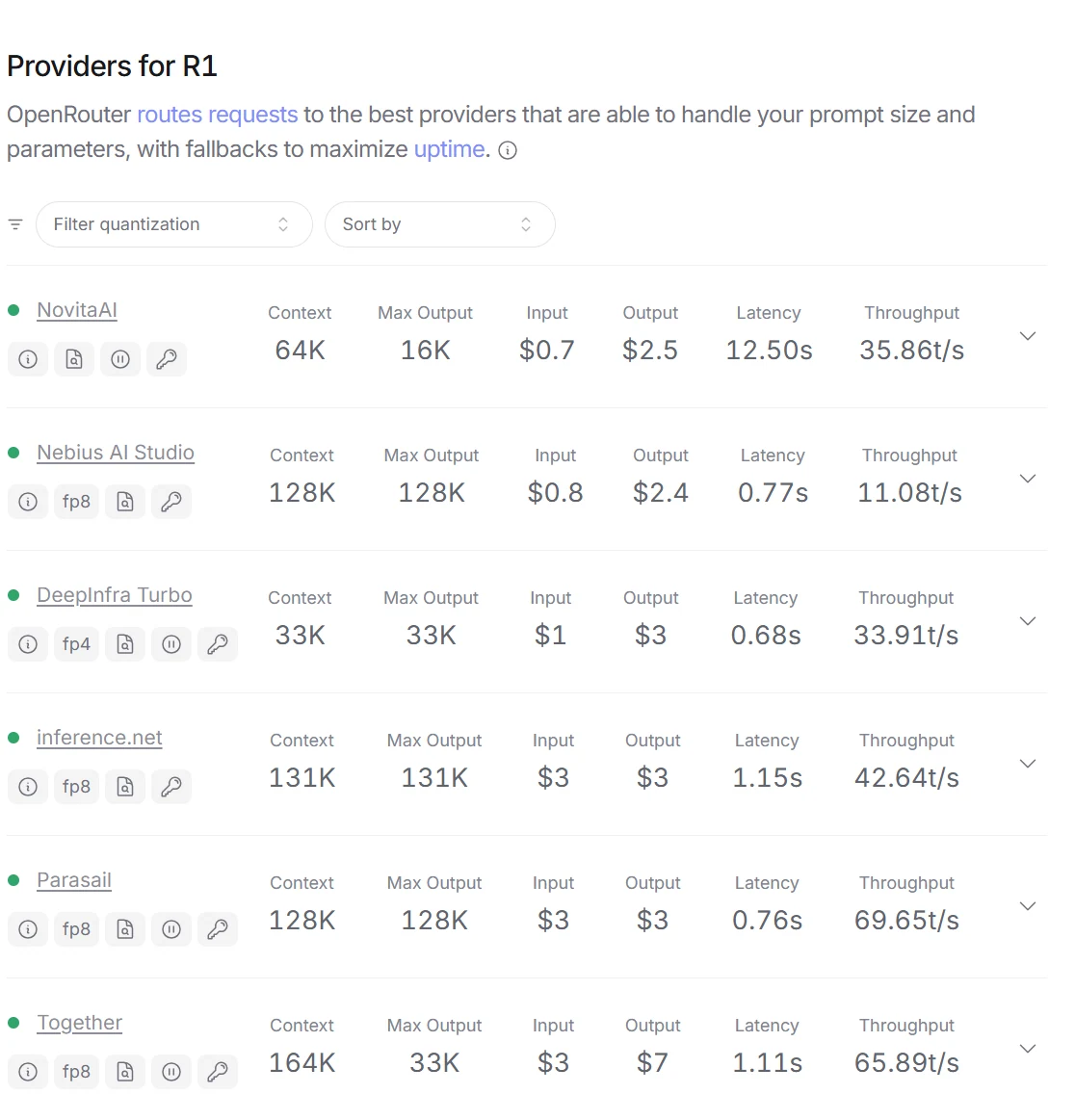
Cost-Effectiveness vs Speed: DeepSeek R1 is more economical and open-source, ideal for developers needing customization. Claude 3.5 provides faster outputs but at a higher cost. And Novita AI launches a Turbo version with 3x throughput and a limited-time 60% discount!
Anthropic’s Claude 3.5 Sonnet and DeepSeek’s R1 have emerged as key players in the rapidly evolving field of artificial intelligence. Released at different times, both models demonstrate advanced capabilities and have gained significant attention for their unique features and performance attributes.
DeepSeek R1 vs Claude 3.5: Basic Introduction
| Feature | DeepSeek R1 | Claude 3.5 Sonnet |
|---|---|---|
| Release Date | January 20, 2025 | October 22, 2024 |
| Model Size | 671 billion parameters (total), 37 billion activated per token | Approximately 100 billion parameters |
| Supported Languages | Primarily Chinese and English | Multilingual |
| Model Architecture | Mixture-of-Experts (MoE), trained through large-scale reinforcement learning with minimal supervised fine-tuning | Proprietary |
| Context Window | 128k tokens | 200k tokens |
| Quantization Precision | BF16, F8_E4M3, F32 (as per Hugging Face) | Not explicitly specified in sources |
| Open Source | Yes | No |
| Developer | DeepSeek | Anthropic |
| Multimodal Capability | Text-only | Supports interpreting charts and graphics |
Deepseek R1
- DeepSeek R1 is purpose-built for tasks that demand advanced reasoning and programming assistance. It leverages a Mixture-of-Experts (MoE) architecture, activating only a subset of its vast parameters for each token, thereby optimizing computational efficiency. Trained through large-scale reinforcement learning (RL) with minimal supervised fine-tuning (SFT), DeepSeek R1 places a strong emphasis on logic and problem-solving capabilities.
Claude 3.5 Sonnet
- Claude 3.5 Sonnet, Anthropic’s most advanced model, combines exceptional performance with enhanced speed. It features a large context window and excels at understanding nuanced and complex instructions. As part of the Claude 3.5 model family, it delivers significant improvements over its predecessors, particularly in areas such as coding and tool utilization.
You can start a free trail on Novita AI for Deepseek R1 series!
DeepSeek R1 vs Claude 3.5: Benchmark
| Benchmark | Description | DeepSeek R1 | Claude 3.5 Sonnet |
|---|---|---|---|
| Codeforces (Percentile) | Programming problem-solving percentile. | 96.3% | 20.3% |
| Codeforces (Rating) | Programming contest rating. | 2029 | 717 |
| SWE Verified (Resolved) | Software engineering problems solved. | 49.2% | 50.8% |
| LiveCodeBench (Pass@1-COT) | Coding success with chain-of-thought reasoning. | 65.9% | 33.8% |
| AIME 2024 (Pass@1) | Advanced math problem-solving. | 79.8% | 16.0% |
| MMLU-Pro (EM) | Professional-level task accuracy. | 84.0% | 78.0% |
| GPQA-Diamond (Pass@1) | General-purpose question answering. | 71.5% | 65.0% |
| AlpacaEval2.0 (LC-winrate) | Language comprehension and conversation tasks. | 87.6% | 52.0% |
| ArenaHard (GPT-4-1106) | Hard reasoning tasks vs. GPT-4. | 92.3% | 85.2% |
| Debugging Accuracy | Identifying and fixing code bugs. | 90% | 75% |
Deepseek R1
DeepSeek R1 excels in programming, debugging, and advanced mathematical reasoning, making it ideal for technical and logic-heavy tasks. Its strong performance in benchmarks like Codeforces, AIME, and debugging accuracy highlights its capabilities in these areas.
Claude 3.5 Sonnet
Claude 3.5 Sonnet, while weaker in programming and math, performs well in language comprehension and general-purpose knowledge tasks, making it better suited for multilingual and conversational applications.
DeepSeek R1 vs Claude 3.5: Speed and Cost
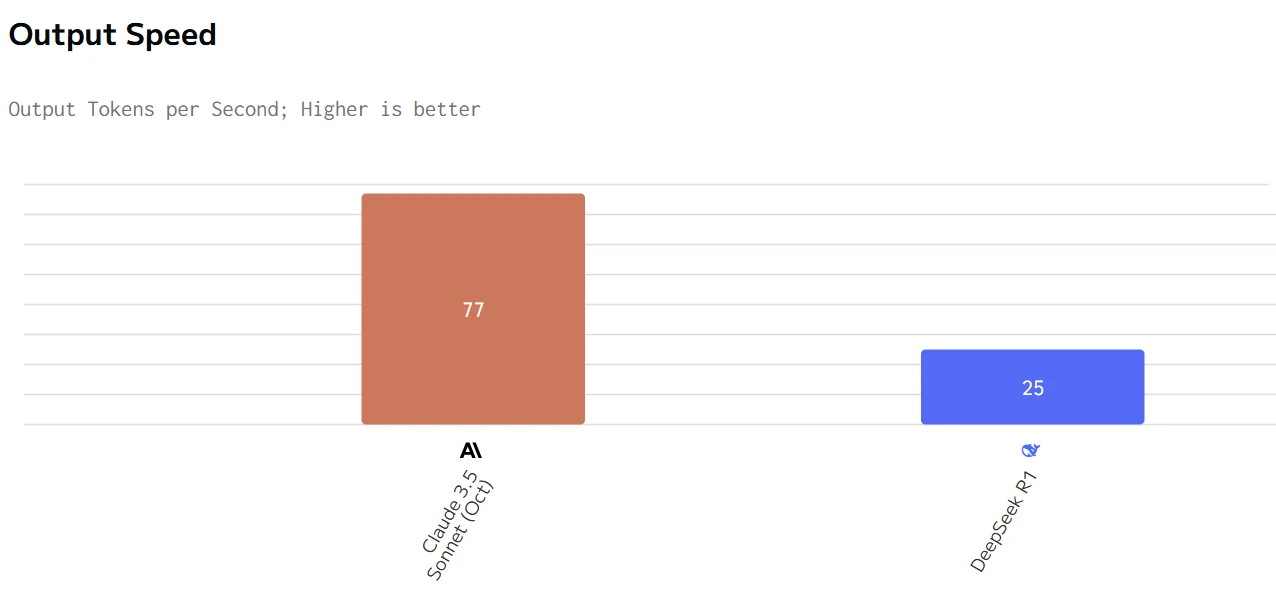
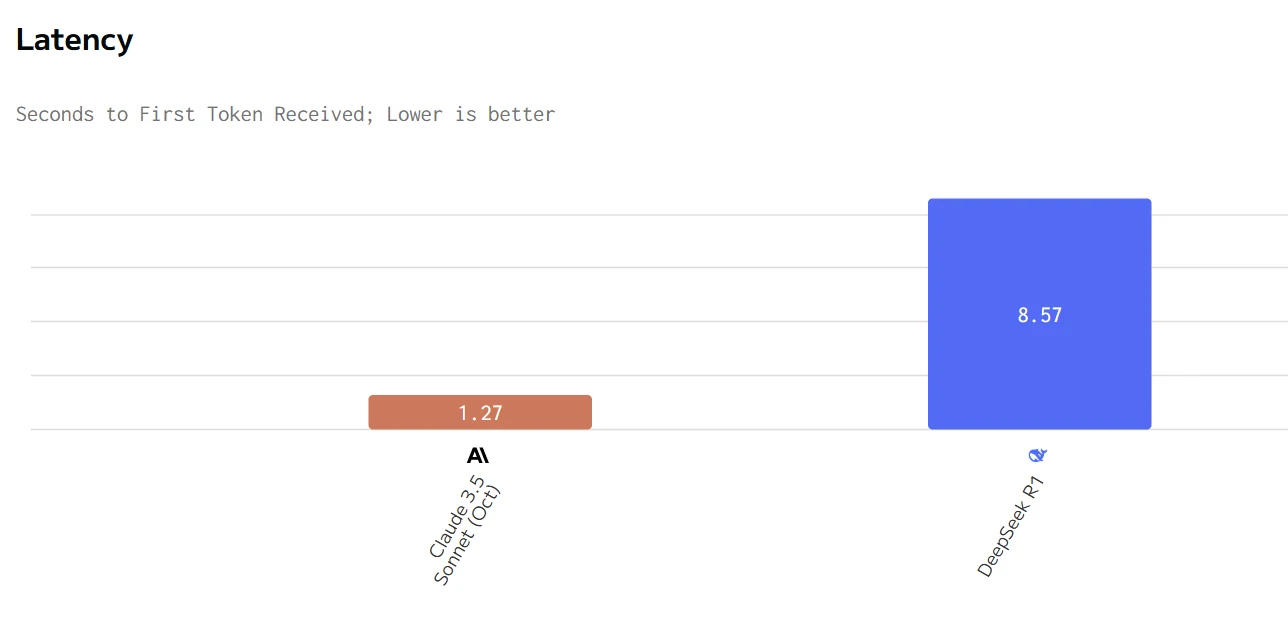
Speed Comparison of Deepseek R1 and Claude 3.5
Cost Comparison of Deepseek R1 and Claude 3.5
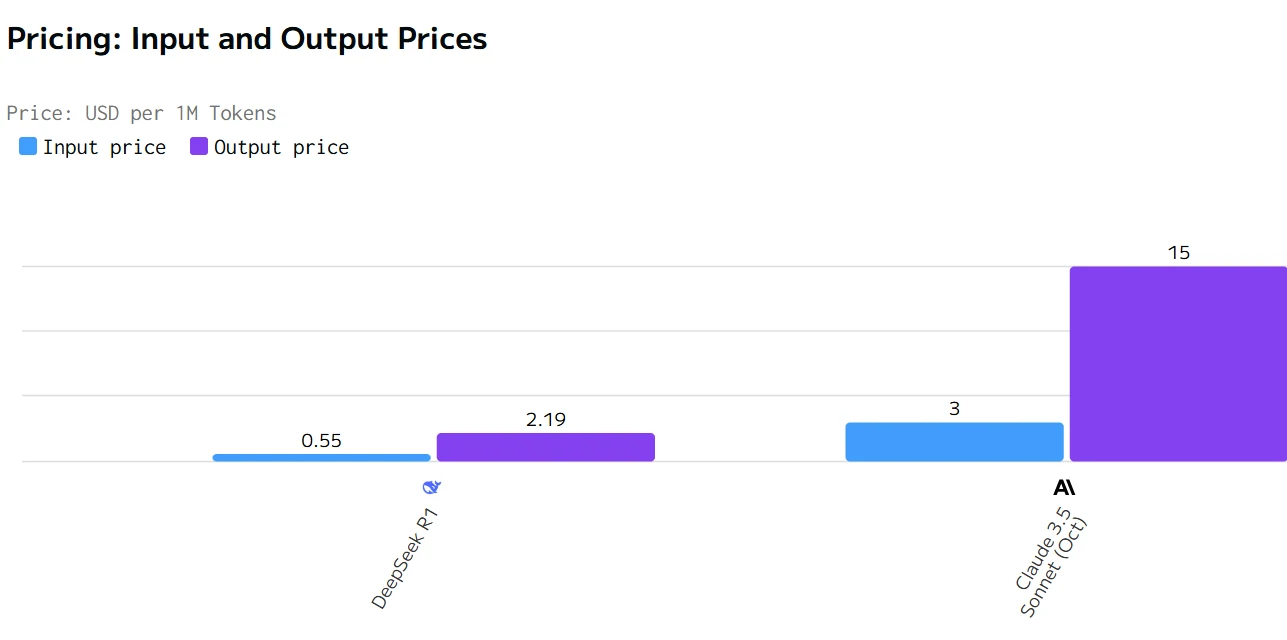
The above data comes from artificial analysis
Claude offers superior performance metrics (faster output speed and lower latency) but at a considerably higher price point. DeepSeek R1 is more economical but slower in response and generation. The choice between them would depend on whether speed and responsiveness or cost-efficiency is the higher priority for a specific use case.
However, Novita AI launches a Turbo version with 3x throughput and a limited-time 60% discount!
DeepSeek R1 Vs Claude 3.5: Tasks
Task 1: Logical Reasoning
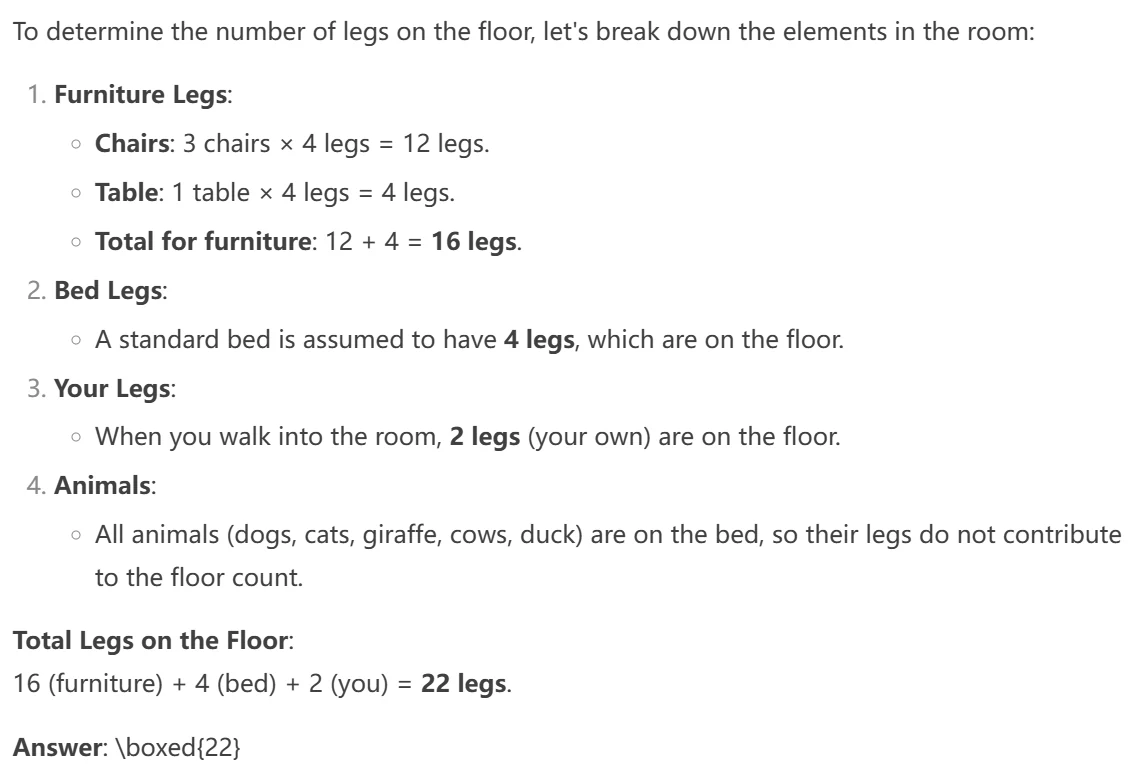
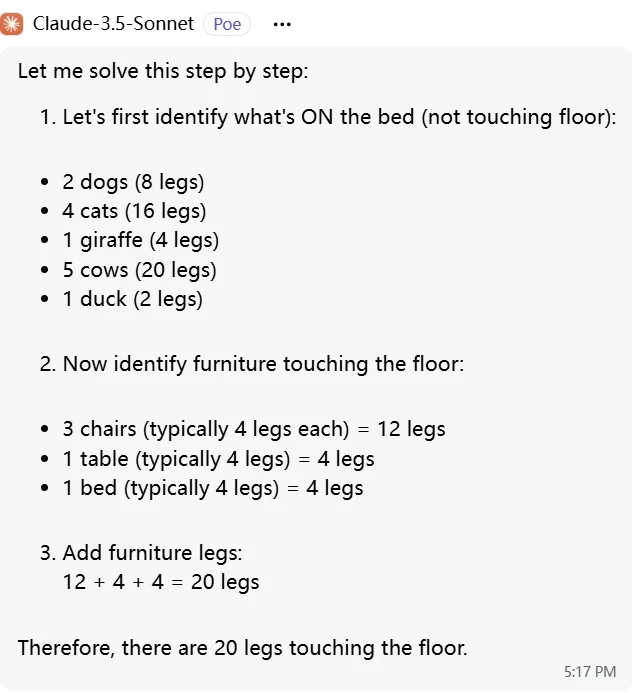
Prompt: “You walk into a room and see a bed. On the bed there are two dogs, four cats, a giraffe, five cows, and a duck. There are also three chairs and a table. How many legs are on the floor?”
Deepseek R1 Result
Claude 3.5 Result
Review:
- Reasoning depth: DeepSeek R1 demonstrates a deeper, more thorough reasoning process, considering all aspects of the problem.
- Accuracy: DeepSeek R1 ultimately arrives at the correct answer (22), while Claude 3.5 incorrectly concludes 20.
- Self-verification capability: DeepSeek R1 continuously reviews and checks its reasoning, whereas Claude 3.5 lacks this self-verification mechanism.
- Ambiguity handling: DeepSeek R1 is able to address ambiguities in the problem (such as whether the bed has legs), while Claude 3.5 makes simple assumptions without explanation.
- Transparency of thought: DeepSeek R1’s thinking process is more transparent, allowing people to understand its reasoning path.
Task 2: Scientific Reasoning
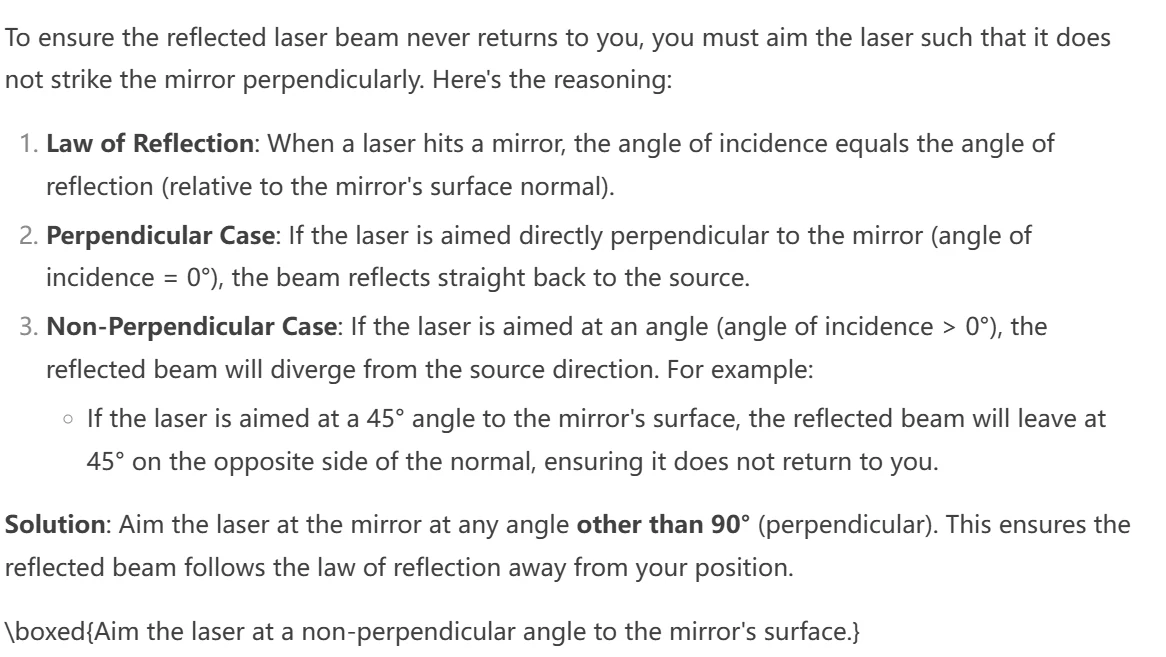
Prompt: “You have a powerful laser and a perfectly reflective mirror. How can you aim the laser at the mirror in such a way that the reflected beam never comes back to you?”
Deepseek R1 Result
Claude 3.5 Result
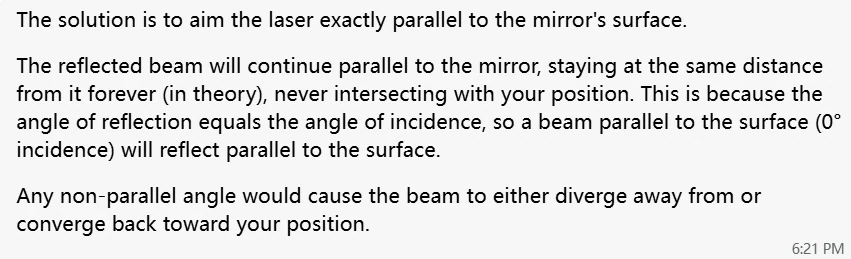
Review:
- DeepSeek R1 demonstrates significantly stronger scientific reasoning:
- Physical Accuracy: DeepSeek R1’s answer is physically correct and follows established optical principles, while Claude 3.5’s answer contains fundamental misconceptions.
- Logical Consistency: DeepSeek R1 maintains logical consistency throughout its explanation, while Claude 3.5’s response contains internal contradictions.
- Problem Solving: DeepSeek R1 correctly solves the problem by providing a valid range of solutions, while Claude 3.5 proposes an impossible solution.
- Scientific Literacy: DeepSeek R1 demonstrates proper understanding of the law of reflection, while Claude 3.5 appears to confuse basic optical concepts.
Task 3: Problem-Solving Skills
Prompt: “Write a program that can solve a Sudoku puzzle”
Deepseek R1 Result
def find_empty(grid):
    for row in range(9):
        for col in range(9):
            if grid[row][col] == 0:
                return (row, col)  # Return empty cell position
    return None  # No empty cells left

def is_valid(grid, num, pos):
    row, col = pos

    # Check row
    for i in range(9):
        if grid[row][i] == num and i != col:
            return False

    # Check column
    for i in range(9):
        if grid[i][col] == num and i != row:
            return False

    # Check 3x3 subgrid
    start_row = (row // 3) * 3
    start_col = (col // 3) * 3
    for i in range(start_row, start_row + 3):
        for j in range(start_col, start_col + 3):
            if grid[i][j] == num and (i, j) != pos:
                return False
    return True

def solve(grid):
    empty = find_empty(grid)
    if not empty:
        return True  # Puzzle solved

    row, col = empty
    for num in range(1, 10):
        if is_valid(grid, num, (row, col)):
            grid[row][col] = num  # Place number

            if solve(grid):
                return True  # Continue solving

            grid[row][col] = 0  # Backtrack if invalid

    return False  # Trigger backtracking

def print_grid(grid):
    for row in grid:
        print(row)

# Example Sudoku puzzle (0 represents empty cells)
grid = [
    [5,3,0,0,7,0,0,0,0],
    [6,0,0,1,9,5,0,0,0],
    [0,9,8,0,0,0,0,6,0],
    [8,0,0,0,6,0,0,0,3],
    [4,0,0,8,0,3,0,0,1],
    [7,0,0,0,2,0,0,0,6],
    [0,6,0,0,0,0,2,8,0],
    [0,0,0,4,1,9,0,0,5],
    [0,0,0,0,8,0,0,7,9]
]

if solve(grid):
    print("Solved Sudoku:")
    print_grid(grid)
else:
    print("No solution exists")
Claude 3.5 Result
def print_board(board):
    for i in range(9):
        if i % 3 == 0 and i != 0:
            print("- - - - - - - - - - - -")
        for j in range(9):
            if j % 3 == 0 and j != 0:
                print("|", end=" ")
            if j == 8:
                print(board[i][j])
            else:
                print(str(board[i][j]) + " ", end="")

def find_empty(board):
    for i in range(9):
        for j in range(9):
            if board[i][j] == 0:
                return (i, j)
    return None

def valid(board, num, pos):
    # Check row
    for j in range(9):
        if board[pos[0]][j] == num and pos[1] != j:
            return False

    # Check column
    for i in range(9):
        if board[i][pos[1]] == num and pos[0] != i:
            return False

    # Check box
    box_x = pos[1] // 3
    box_y = pos[0] // 3

    for i in range(box_y * 3, box_y * 3 + 3):
        for j in range(box_x * 3, box_x * 3 + 3):
            if board[i][j] == num and (i, j) != pos:
                return False

    return True

def solve(board):
    empty = find_empty(board)
    if not empty:
        return True

    row, col = empty

    for num in range(1, 10):
        if valid(board, num, (row, col)):
            board[row][col] = num

            if solve(board):
                return True

            board[row][col] = 0

    return False

# Example puzzle (0 represents empty cells)
board = [
    [5, 3, 0, 0, 7, 0, 0, 0, 0],
    [6, 0, 0, 1, 9, 5, 0, 0, 0],
    [0, 9, 8, 0, 0, 0, 0, 6, 0],
    [8, 0, 0, 0, 6, 0, 0, 0, 3],
    [4, 0, 0, 8, 0, 3, 0, 0, 1],
    [7, 0, 0, 0, 2, 0, 0, 0, 6],
    [0, 6, 0, 0, 0, 0, 2, 8, 0],
    [0, 0, 0, 4, 1, 9, 0, 0, 5],
    [0, 0, 0, 0, 8, 0, 0, 7, 9]
]

print("Original Sudoku:")
print_board(board)
print("\
Solving...\
")

if solve(board):
    print("Solved Sudoku:")
    print_board(board)
else:
    print("No solution exists")
Review:
- Algorithm Implementation: Both are on par, correctly implementing the Sudoku solving algorithm
- Code Readability: Claude 3.5’s generated code is slightly better, particularly with more user-friendly printing functionality
- User Experience: Claude 3.5 provides a more complete user experience, including feedback on the processing stages
- Code Style: Both maintain good and consistent Python coding style
- Practicality: Claude 3.5’s generated code may have a slight edge in practical use due to its clearer output format
How to access DeepSeek R1 via API?
Novita AI is an AI cloud platform that offers developers an easy way to deploy AI models using our simple API, while also providing the affordable and reliable GPU cloud for building and scaling.
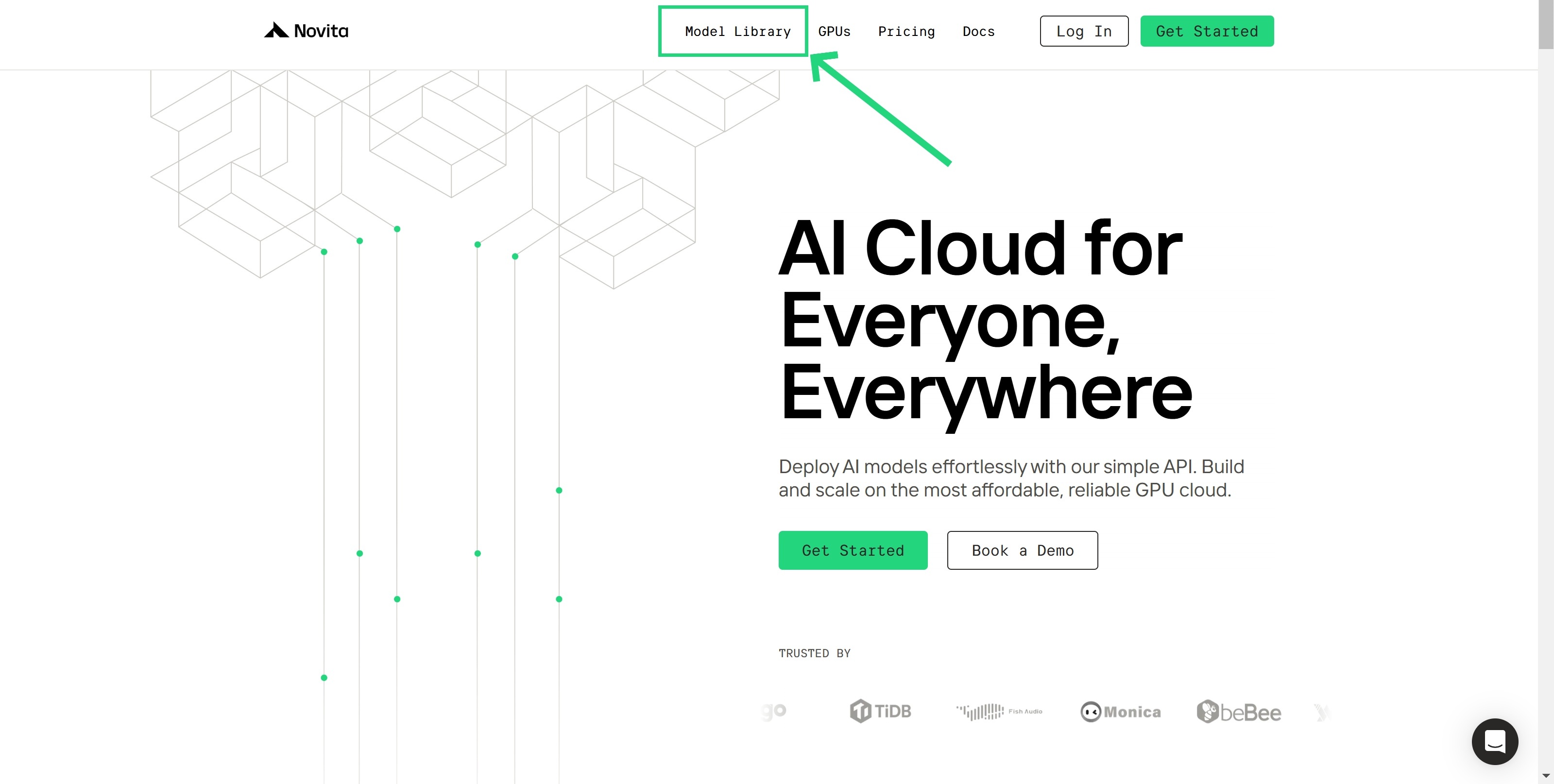
Step 1: Log In and Access the Model Library
Log in to your account and click on the Model Library button.
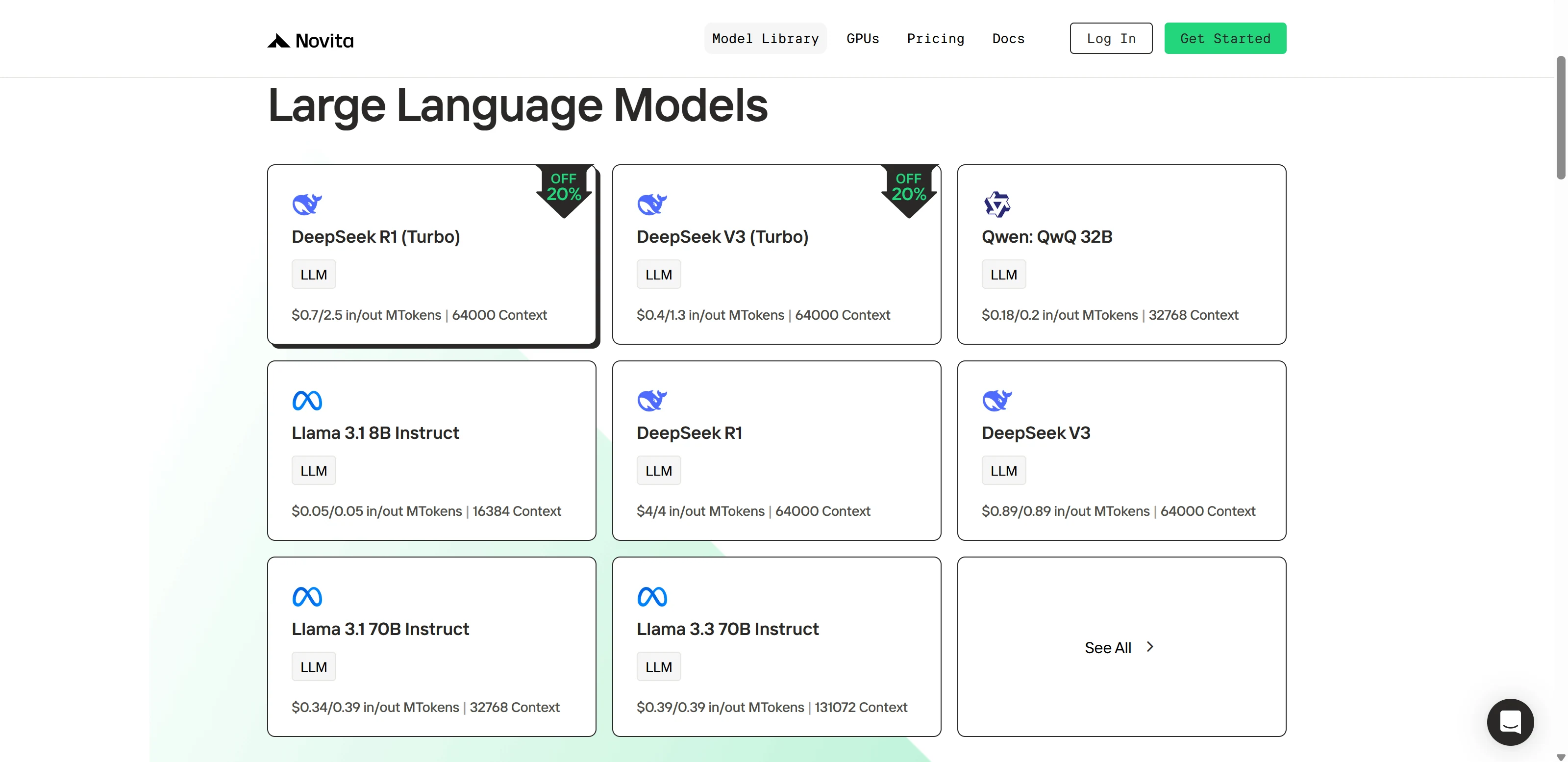
Step 2: Choose Your Model
Browse through the available options and select the model that suits your needs.
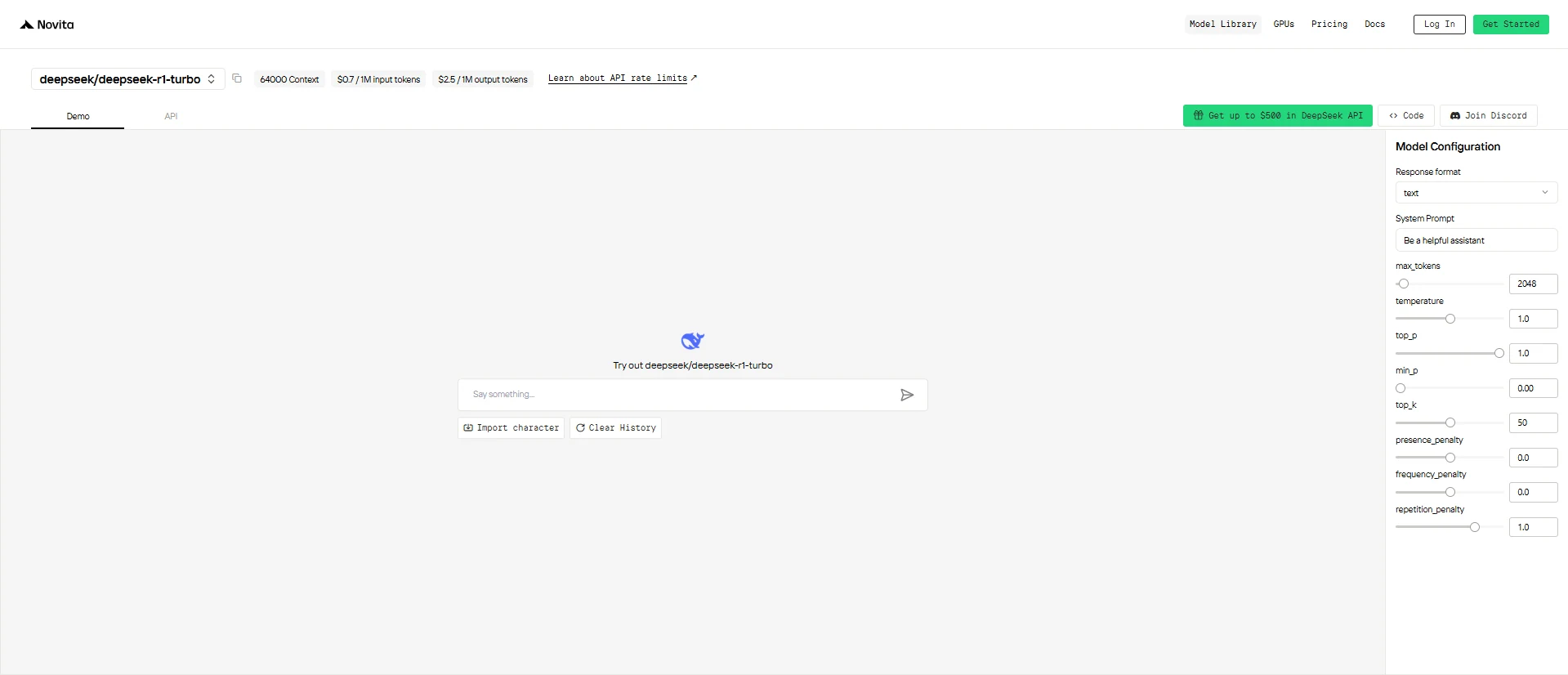
Step 3: Start Your Free Trial
Begin your free trial to explore the capabilities of the selected model.
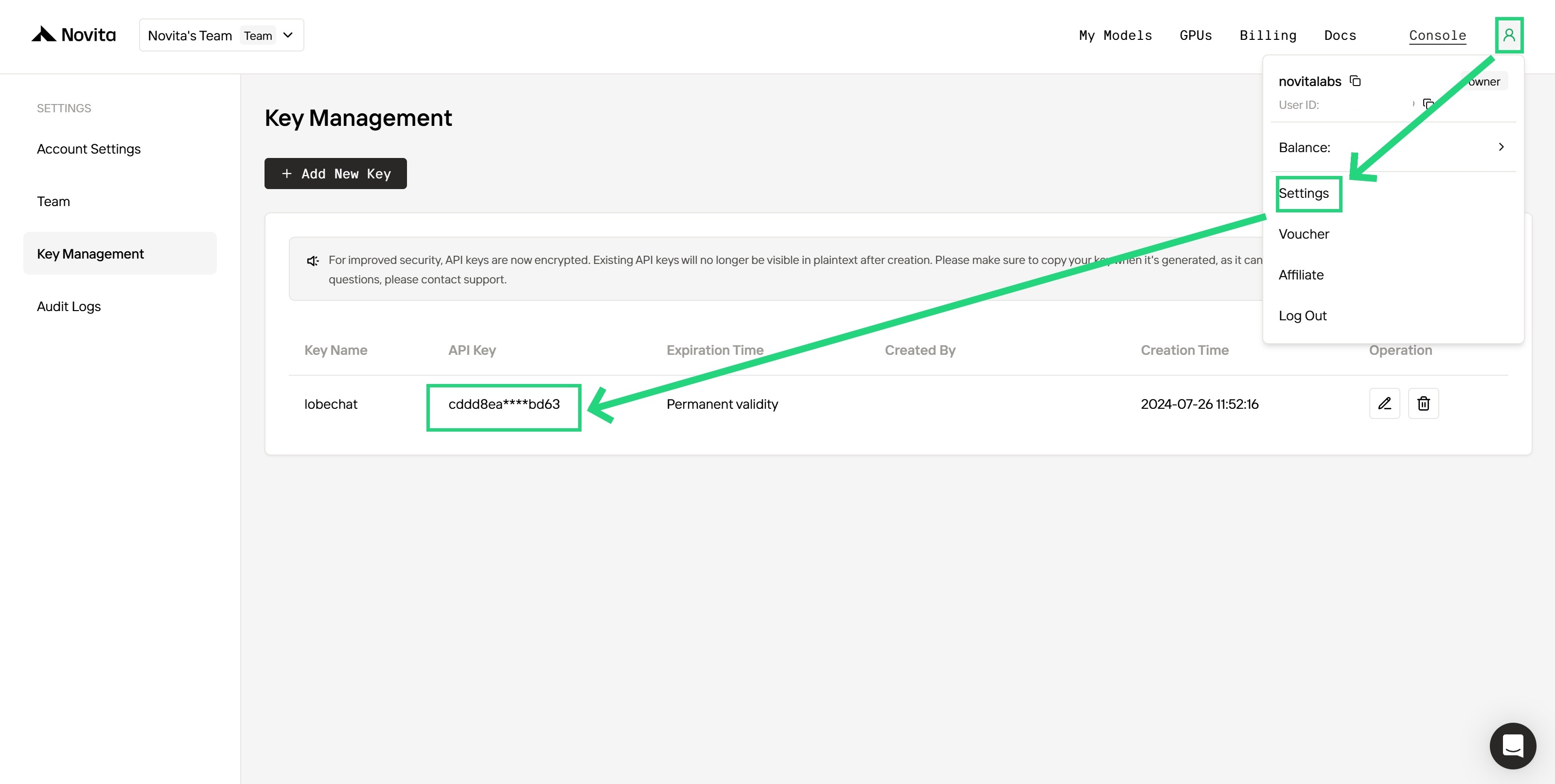
Step 4: Get Your API Key
To authenticate with the API, we will provide you with a new API key. Entering the “Settings“ page, you can copy the API key as indicated in the image.
Step 5: Install the API
Install API using the package manager specific to your programming language.
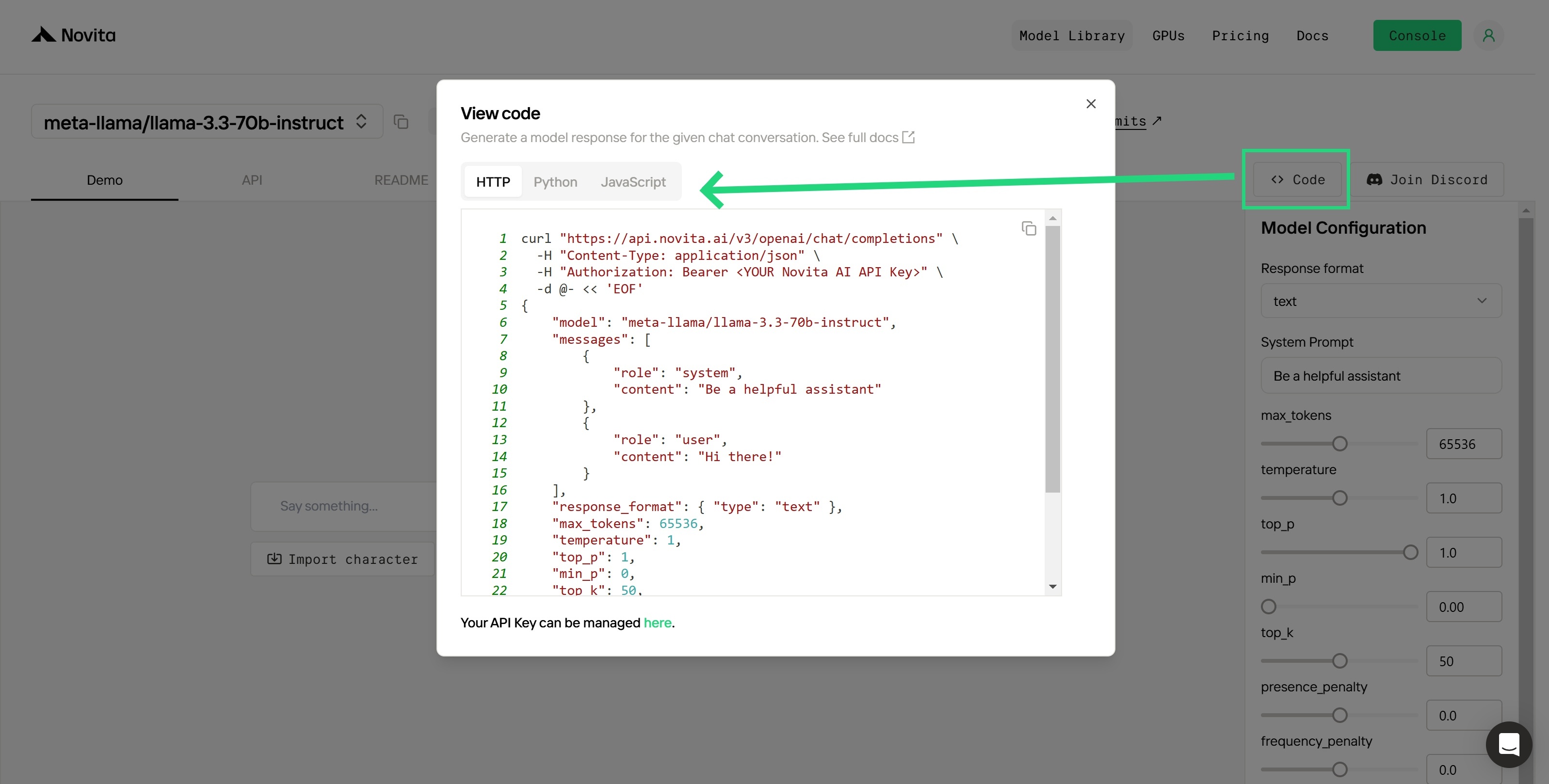
After installation, import the necessary libraries into your development environment. Initialize the API with your API key to start interacting with Novita AI LLM. This is an example of using chat completions API for python users.
from openai import OpenAI

client = OpenAI(
    base_url="https://api.novita.ai/v3/openai",
    api_key="<YOUR Novita AI API Key>",
)

model = "deepseek/deepseek_r1"
stream = True # or False
max_tokens = 2048
system_content = """Be a helpful assistant"""
temperature = 1
top_p = 1
min_p = 0
top_k = 50
presence_penalty = 0
frequency_penalty = 0
repetition_penalty = 1
response_format = { "type": "text" }

chat_completion_res = client.chat.completions.create(
    model=model,
    messages=[
        {
            "role": "system",
            "content": system_content,
        },
        {
            "role": "user",
            "content": "Hi there!",
        }
    ],
    stream=stream,
    max_tokens=max_tokens,
    temperature=temperature,
    top_p=top_p,
    presence_penalty=presence_penalty,
    frequency_penalty=frequency_penalty,
    response_format=response_format,
    extra_body={
      "top_k": top_k,
      "repetition_penalty": repetition_penalty,
      "min_p": min_p
    }
  )

if stream:
    for chunk in chat_completion_res:
        print(chunk.choices[0].delta.content or "", end="")
else:
    print(chat_completion_res.choices[0].message.content)
DeepSeek R1 and Claude 3.5 Sonnet each have unique strengths. DeepSeek R1 excels in math, coding, and logical problem-solving, offering cost-efficiency and customization as an open-source model—ideal for developers, researchers, or budget-conscious organizations.
Claude 3.5 Sonnet shines in multilingual tasks, code generation, visual reasoning, and handling large context windows. Its seamless integration via APIs makes it versatile for research, content creation, and advanced chatbots.
The choice depends on task requirements and user priorities, such as cost, domain expertise, or ease of use.
Frequently Asked Question
Which model is more cost-effective?
DeepSeek R1 is significantly more affordable than Claude 3.5 Sonnet, especially for input and output tokens. Meanwhile, Novita AI offers DeepSeek R1 Turbo, which is an optimized version of DeepSeek R1, offering 3x throughput, full support for function calling, and a limited-time 60% discount!
What is the context window size for each model?
DeepSeek R1 has a context window of 128k tokens, while Claude 3.5 Sonnet offers a larger 200k token context window.
Is DeepSeek R1 open source?
Yes, DeepSeek R1 is fully open-source, allowing for local hosting and customization.
Novita AI is the All-in-one cloud platform that empowers your AI ambitions. Integrated APIs, serverless, GPU Instance — the cost-effective tools you need. Eliminate infrastructure, start free, and make your AI vision a reality.