The landscape of AI development has evolved dramatically, with Graphics Processing Units (GPUs) becoming the backbone of machine learning and deep learning workloads. As we navigate through 2025, organizations face a critical decision: should they invest in on-premise GPU infrastructure or leverage cloud-based GPU solutions? This choice impacts everything from cost structure and performance to scalability and security. Understanding the nuances of both options is essential for making an informed decision that aligns with your specific AI project requirements and organizational goals.
Understanding GPUs and Their Role in AI
What is GPU?
A GPU (Graphics Processing Unit) is specialized hardware designed to perform parallel computations efficiently. Unlike CPUs, which process tasks sequentially with a few cores, GPUs contain thousands of smaller cores optimized for handling multiple operations simultaneously. This architecture makes them exceptionally well-suited for the mathematical operations that underpin AI workloads.
The parallel processing capabilities of GPUs allow them to perform thousands of calculations concurrently, transforming what would be time-consuming operations on CPUs into tasks that can be completed in a fraction of the time. This efficiency is particularly valuable in domains requiring massive data processing, such as image analysis, video generation, and complex simulations.
Why GPUs are critical for AI workloads in 2025
In 2025, GPU technology has become indispensable for AI development and deployment for several compelling reasons:
- Increased Model Complexity: Modern foundation models often contain hundreds of billions of parameters, requiring massive parallel processing capabilities that only GPUs can efficiently provide.
- Real-time Requirements: Applications like computer vision, natural language processing, and autonomous systems demand real-time inference, which GPUs deliver through parallel execution.
- Energy Efficiency: Despite high power consumption, GPUs deliver significantly better performance-per-watt than CPUs for AI workloads, becoming increasingly important as organizations focus on sustainable computing.
- Specialized AI Acceleration: Current-generation GPUs feature dedicated AI acceleration hardware (like Tensor Cores) that dramatically speeds up training and inference for machine learning models.
- Software Ecosystem: The mature ecosystem of frameworks and libraries (PyTorch, TensorFlow, JAX) is heavily optimized for GPU computation through technologies like cuDNN, making development more efficient.
As AI becomes further embedded in business operations, access to adequate GPU resources has transitioned from a technical advantage to a business necessity.
Key Differences Between Cloud and On-Premise GPU Solutions
When choosing a GPU deployment solution, both cloud-based and on-premise options have their own advantages and disadvantages. The following table compares the key differences between the two, helping you make an informed decision based on your project needs:
| Factor | On-Premise GPUs | Cloud GPUs |
|---|---|---|
| Cost Structure | High upfront investment; lower TCO over time | Pay-as-you-go; higher long-term costs |
| Scalability | Limited; requires hardware upgrades | Instantly scalable on demand |
| Performance | Predictable, low latency | Dependent on network connectivity |
| Maintenance | Requires in-house IT management | Managed by cloud provider |
| Data Security | Full control over sensitive data | Shared infrastructure; compliance varies |
| Customization | Highly customizable infrastructure | Limited to provider’s configurations |
| Access to Hardware | Bound by organization’s budget cycles | Access to the latest GPUs without upgrades |
| Deployment Speed | Slower due to procurement and setup | Immediate access to resources |
| Long-Term Viability | Risk of hardware obsolescence | Always updated with cutting-edge hardware |
Choosing the Right Solution
When to Choose On-Premise GPUs
On-premise GPU solutions are ideal in the following scenarios:
- Consistent, High-Volume Workloads: Organizations with steady, predictable GPU usage that runs continuously will benefit from the long-term cost advantages of on-premise infrastructure.
- Strict Security and Compliance Requirements: Industries handling sensitive data (healthcare, finance, government) that must maintain complete control over their information infrastructure and meet rigorous regulatory standards.
- Real-Time Performance Needs: Applications requiring guaranteed low latency and consistent performance, such as high-frequency trading, real-time video rendering, or critical scientific simulations.
- Customized Hardware Requirements: Projects needing specific hardware configurations or specialized setups that aren’t available through standard cloud offerings.
- Long-Term Investment Strategy: Organizations with stable, long-term AI initiatives that can justify and amortize the upfront capital expenditure over several years.
When to Choose Cloud GPUs
Cloud GPU solutions are the preferred option when:
- Variable or Unpredictable Workloads: Projects with fluctuating resource needs that require rapid scaling capabilities without hardware investments.
- Limited Capital Budget: Startups and organizations looking to minimize upfront costs while maintaining access to high-performance computing resources.
- Temporary or Experimental Projects: Short-term initiatives, proof-of-concept work, or experimental AI research that doesn’t justify permanent infrastructure investment.
- Distributed Teams: Organizations with globally distributed development teams that need collaborative access to shared GPU resources.
- Fast Time-to-Market Requirements: Projects with tight deadlines that benefit from immediate resource availability without procurement and setup delays.
Why Novita AI is Your Best Cloud GPU Partner
Novita AI delivers a powerful GPU cloud platform offering scalable, high-performance computing specifically engineered for AI workloads at competitive rates. Choose between flexible On-Demand pricing for pay-as-you-go flexibility or Subscription plans to optimize your costs. Access cutting-edge GPUs including RTX H100 with no capital investment required. Our solution enables frictionless model deployment and optimization, perfectly suited for customization projects and computationally intensive applications, while maintaining budget efficiency through our dual pricing models. View our detailed GPU pricing to learn more.
Ready to get started with Novita AI? Here’s how to begin your cloud GPU journey:
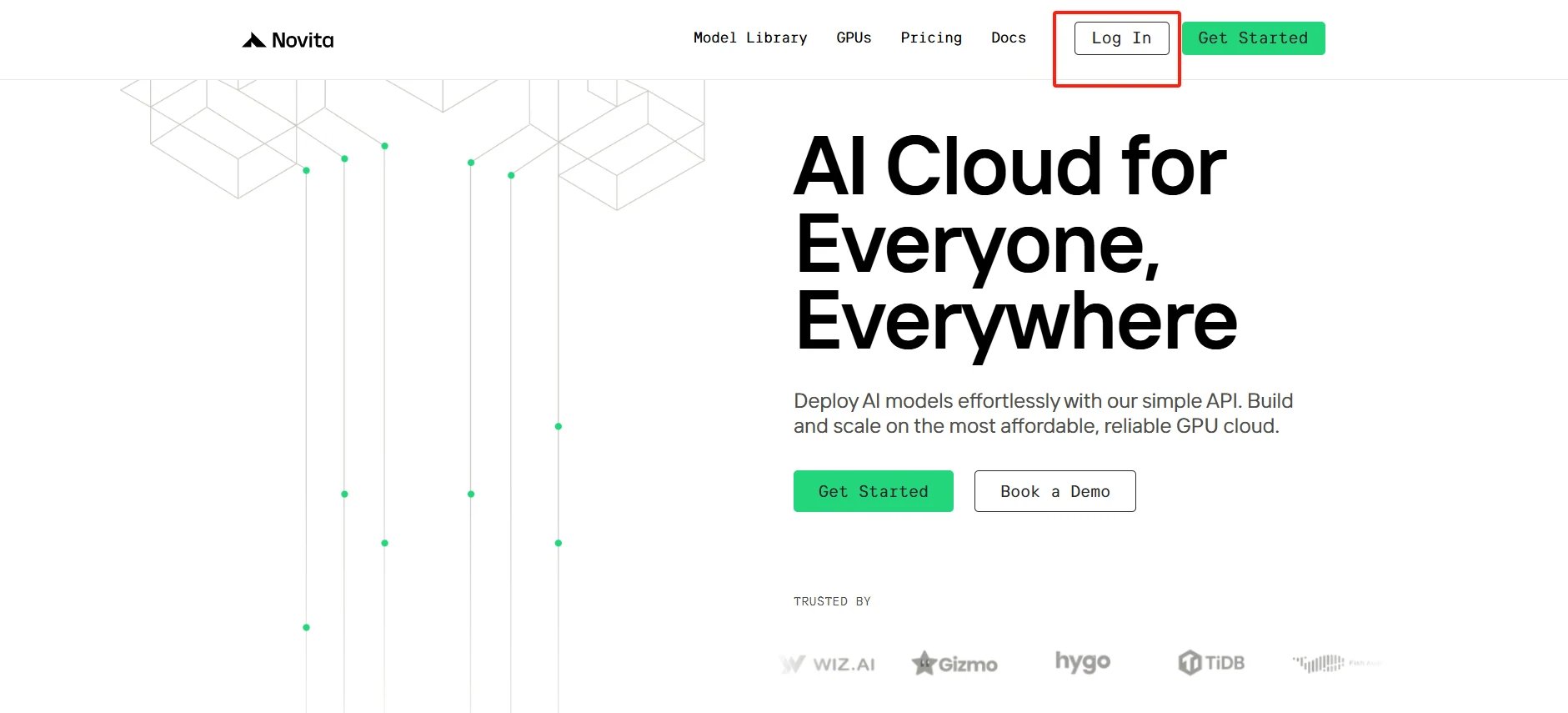
Step1:Create an account
Visit the Novita AI website, create your account, and navigate to the “GPUs” section to browse our powerful computing options and launch your AI projects today.
[Try using Novita AI now](https://novita.ai/?utm_source=blogs_GPU&utm_medium=article&utm_campaign=Cloud vs. On-Premise GPU Solutions in 2025: Making the Right Choice for Your AI Projects)
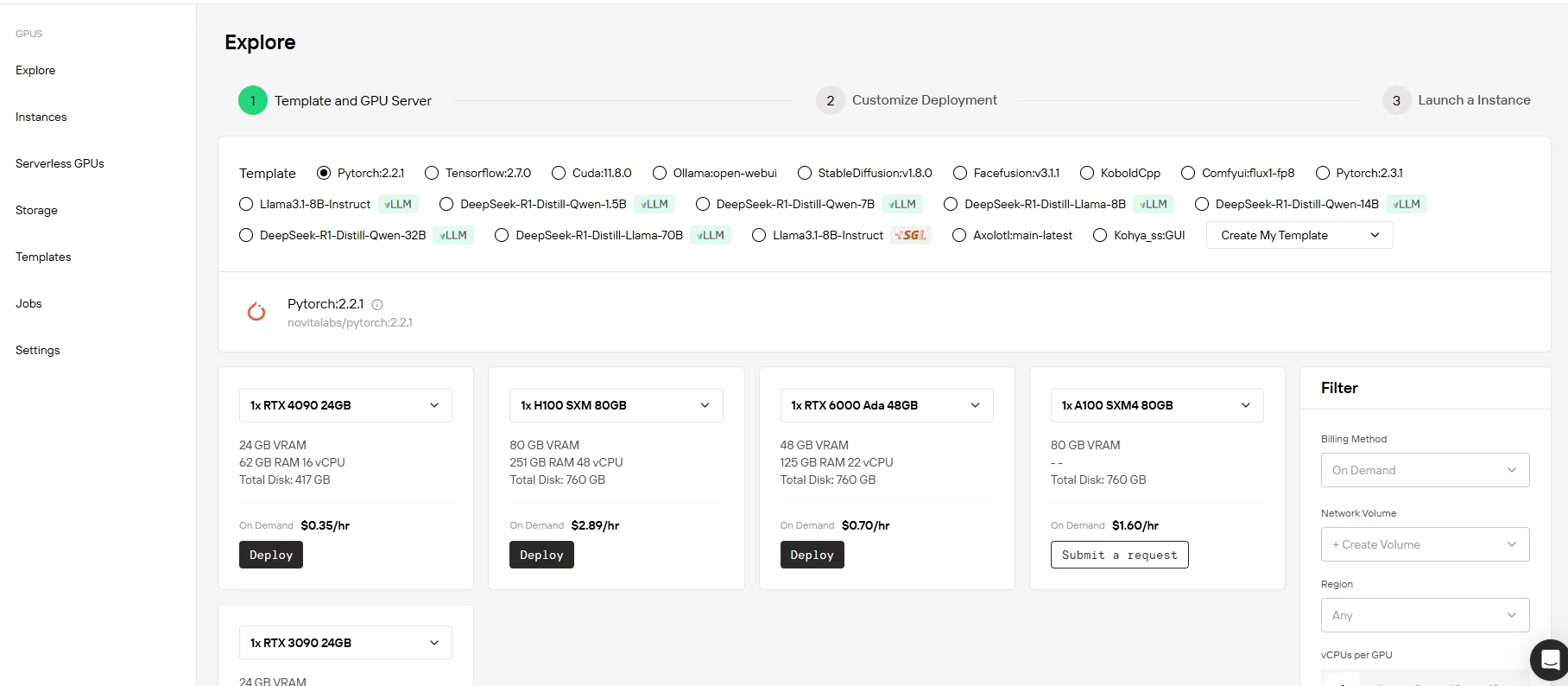
Step2:Select Your GPU
Whether you select from our curated template library or build your own solution, our platform delivers everything you need. Powered by state-of-the-art like NVIDIA RTX H100 GPUs with ample memory resources, we guarantee exceptional performance for even your most intensive AI workloads.
[Try Novita AI’s High-Performance GPUs](https://novita.ai/gpus-console/?utm_source=blogs_GPU&utm_medium=article&utm_campaign=Cloud vs. On-Premise GPU Solutions in 2025: Making the Right Choice for Your AI Projects)
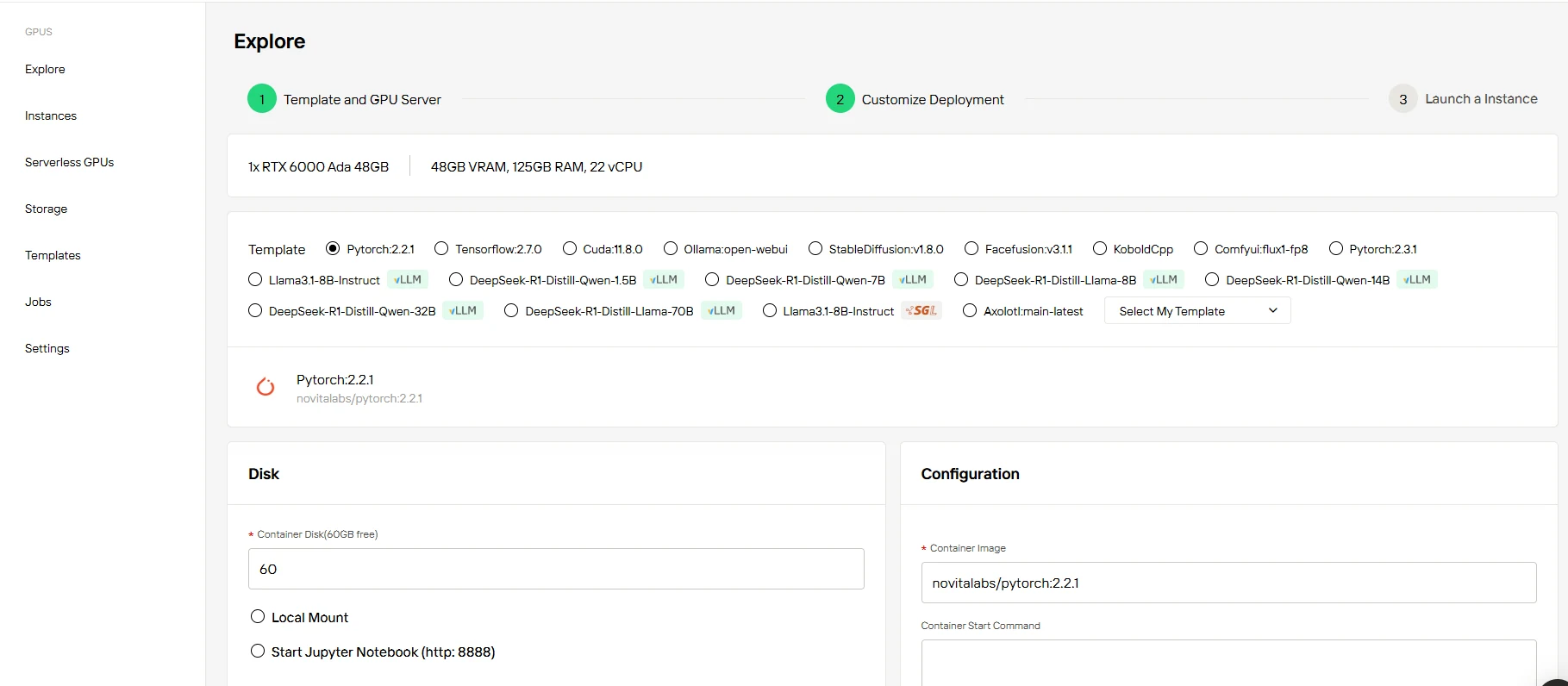
Step3:Customize Your Setup
Each account includes 60GB of free Container Disk storage. As your projects grow, you can easily expand your storage capacity to keep pace with your increasing data requirements.
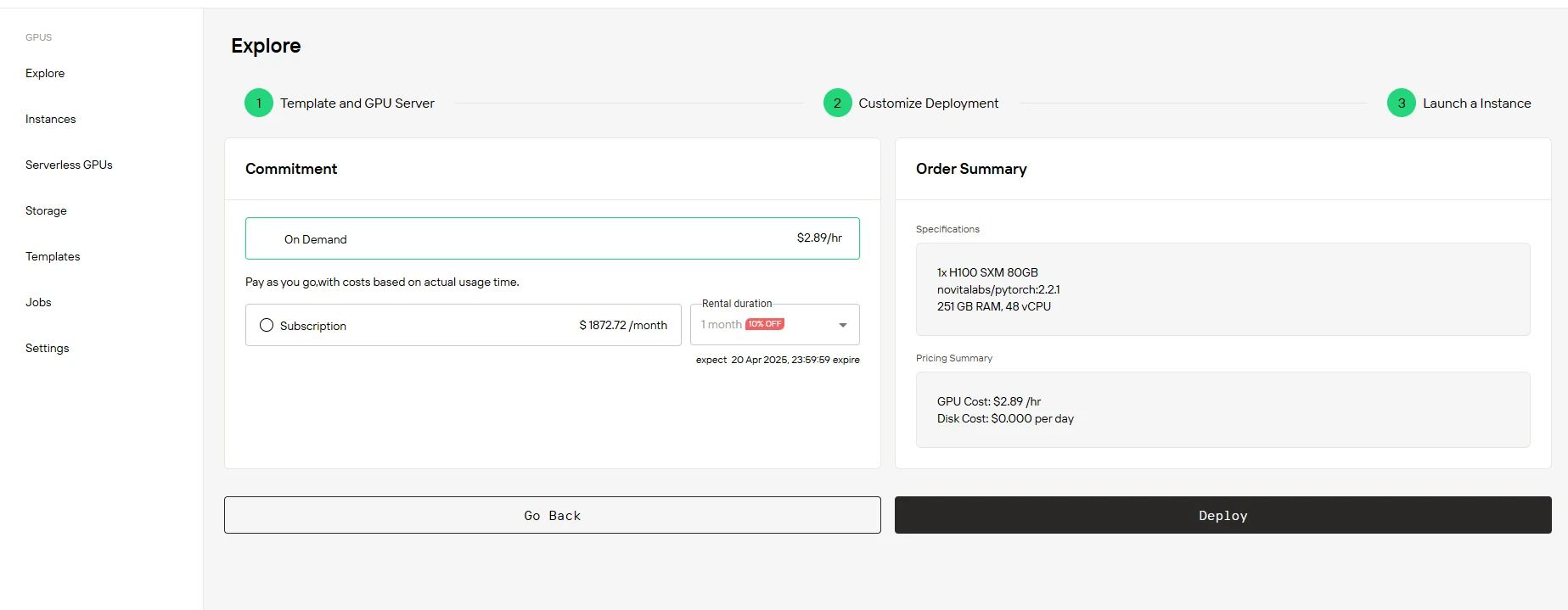
Step4:Launch Your Instance
Select the “On Demand” option, review your configuration and pricing details, then simply click “Deploy” to instantly launch your GPU instance.
Conclusion
Choosing between cloud and on-premise GPU solutions depends on your AI workloads, budget, and organizational needs. On-premise setups provide control and potential cost savings, while cloud solutions offer flexibility and reduced maintenance.
A hybrid approach, combining on-premise stability with cloud scalability, is increasingly popular. This strategy allows organizations to optimize costs and performance while adapting to dynamic project demands.
Ultimately, aligning your GPU strategy with your AI goals ensures you focus on creating impactful solutions rather than managing infrastructure.
Frequently Asked Questions
Which is better for my AI project, cloud GPU or on-premise GPU?
It depends on your specific needs. Cloud GPUs are ideal for projects requiring flexibility, rapid deployment, and on-demand scaling; on-premise GPUs are better for continuous workloads, strict data security requirements, or when complete hardware control is needed.
What are the minimum GPU requirements for AI projects in 2025?
AI projects in 2025 typically require GPUs with at least 24GB of memory, with advanced projects potentially needing 48GB or more. Latest generation GPUs like NVIDIA RTX H100 can handle most modern AI workloads effectively.
What are the key flexibility advantages of cloud GPU solutions?
Cloud GPUs offer instant access, on-demand scaling, variety of GPU models, no upfront investment, automatic upgrades to the latest hardware, and global accessibility.
[Novita AI](https://novita.ai/?utm_source=blogs_GPU&utm_medium=article&utm_campaign=Cloud vs. On-Premise GPU Solutions in 2025: Making the Right Choice for Your AI Projects) is an AI cloud platform that offers developers an easy way to deploy AI models using our simple API, while also providing the affordable and reliable GPU cloud for building and scaling.
Recommended Reading
What is GPU Cloud: A Comprehensive Guide