AI agents have become one of the hottest topics in today’s tech landscape, promising smarter automation and more adaptive workflows. Yet as adoption grows, many people confuse agents with traditional workflows. Both aim to streamline tasks, but they operate in fundamentally different ways—and choosing the wrong approach can lead to wasted effort or unnecessary complexity. So when should you rely on a predefined workflow, and when does it make sense to deploy an agent?
This article will help you draw a clear line between the two. You’ll gain a deeper understanding of their differences, explore the pros and cons of introducing AI agents, and discover why starting with direct APIs often provides the clearest path to building effective AI agents.
Agent vs Workflow: Definition
What is Workflow?
A workflow is a predefined sequence of tasks that follow a set of rules or conditions. Each step is arranged in advance designed by human beings, ensuring the process runs predictably from start to finish. Because workflows are structured, they excel at repetitive, rule-based tasks where stability and compliance matter most. In short, workflows emphasize human control, reliability, and repeatability—ideal for processes that should behave the same way every time.
What is Agent?
An agent is a system in which a language model directs its own process for completing tasks. Instead of following a fully predefined path, the agent chooses which actions to take, what tools to use, and how to adjust based on the situation. This autonomy makes agents fundamentally different from workflows: workflows are orchestrated by human-designed code paths, while agents maintain control over their execution and tool usage. In short, agents emphasize adaptability, decision-making, and autonomy, enabling them to handle complex or unpredictable tasks that cannot be reduced to static rule
How Workflows and Agents Are Built?
Common Ground: Augmented LLM as Foundation
Whether organized as a workflow or as an agent, both approaches rely on the same foundation: an augmented large language model. A base LLM alone can generate text, but practical systems demand more. They are extended with external capabilities such as:
- Retrieval: accessing knowledge bases or vector databases to ground responses in up-to-date information.
- Tool Use: calling APIs, running code, or interfacing with external systems to take actions beyond text generation.
- Memory: storing past interactions, either short-term for context within a session or long-term for personalization across sessions.
These enhancements transform an LLM into something more than a text generator: they make it capable of structured reasoning, reliable execution, and adaptive behavior. Workflows and agents then diverge in how they organize and control these capabilities—workflows through predefined sequences, agents through dynamic decision-making.
Implementation:
Workflow
1. Basic Paradigms
- Prompt Chaining: breaking a task into multiple smaller prompts where each step feeds into the next. This ensures better control and reduces errors compared to a single long prompt.
- Routing: directing different inputs to different prompts, tools, or models. For example, customer questions about billing vs. technical issues can be routed to separate flows.
- Multi-LLM Parallelization: using several models at once, each specializing in a subtask, then combining their outputs. This boosts efficiency and accuracy without requiring a single model to handle everything.
2. Advanced Designs
- Orchestrator–Workers: one “controller” model (the orchestrator) assigns tasks to specialized “worker” models or tools, coordinating their outputs into a coherent result.
- Evaluator–Optimizer: a design where one model or component generates a response, and another evaluates or improves it. This iterative feedback loop improves quality and reliability, even for complex requests.
Agent
1. Core Capabilities
- Autonomous Operation – agents start with an instruction from a human (either a one-time command or an interactive dialogue), but then plan and act without requiring every step to be predefined.
- Reasoning and Planning – they decompose tasks into steps, decide what action to take next, and choose which tools or APIs to call.
- Error Recovery – unlike rigid workflows, agents can adapt when a tool call fails or the environment returns unexpected feedback.
2. Advanced Architectures
- Human-in-the-Loop Control – while agents can act independently, checkpoints or stopping conditions are often built in to allow human feedback or to prevent runaway loops.
- Grounding in the Environment – progress is continuously checked against external reality (e.g., results of a code execution or a database query). This “feedback loop” ensures that the agent does not drift away from verifiable facts.
- Iterative Improvement – agents can refine their own outputs, revising plans or trying alternative actions until a goal is met or a stopping rule is triggered.
Workflow vs Agent: Pros and Cons
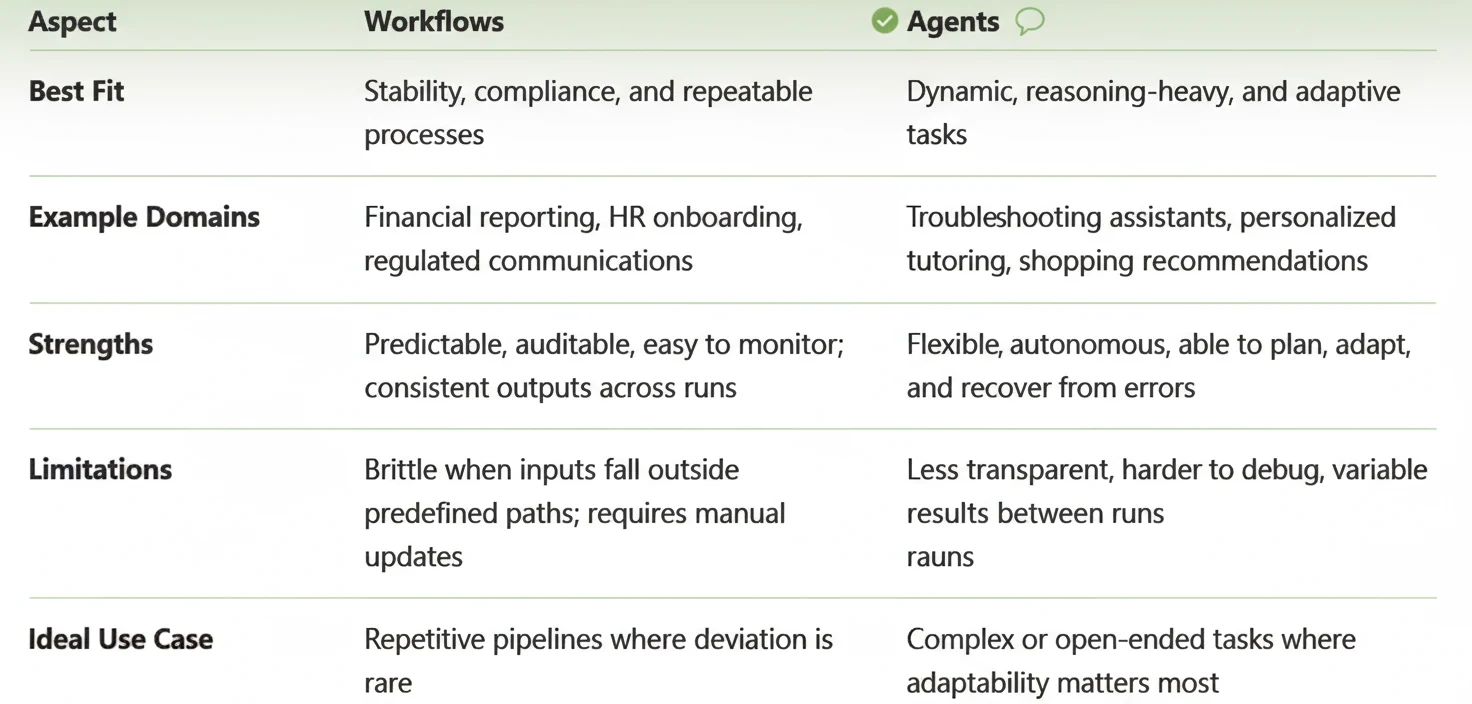
In practice, choosing between workflows and agents is only part of the story. The real question is how to implement them without drowning in complexity. Platforms like Dify, LangChain that add layers of abstraction can make debugging painful. A more transparent path is to integrate APIs across different models from the start.
Novita AI provides APIs that enables direct access to cutting-edge models accross text, image, audio, and video. Instead of juggling fragmented platforms, teams can work with everything they need through a unified API. This flexibility comes with competitive pricing, enabling fast experimentation, smooth scaling, and production deployment without overspending.
How to Obtain APIs on Novita AI?
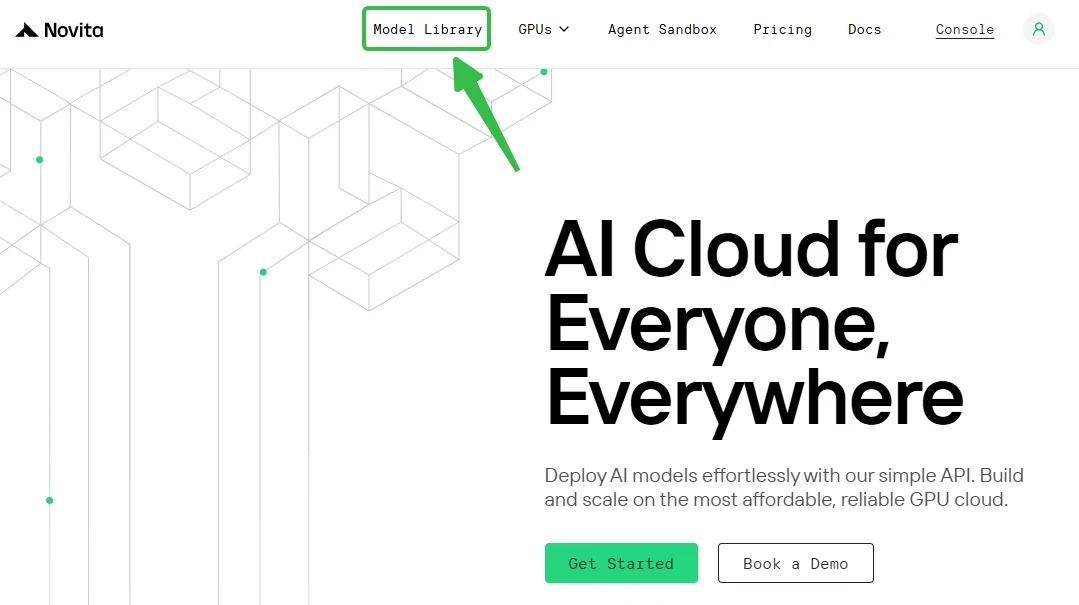
Step 1: Log In and Access the Model Library
Log in or sign up to your account and click on the Model Library button.
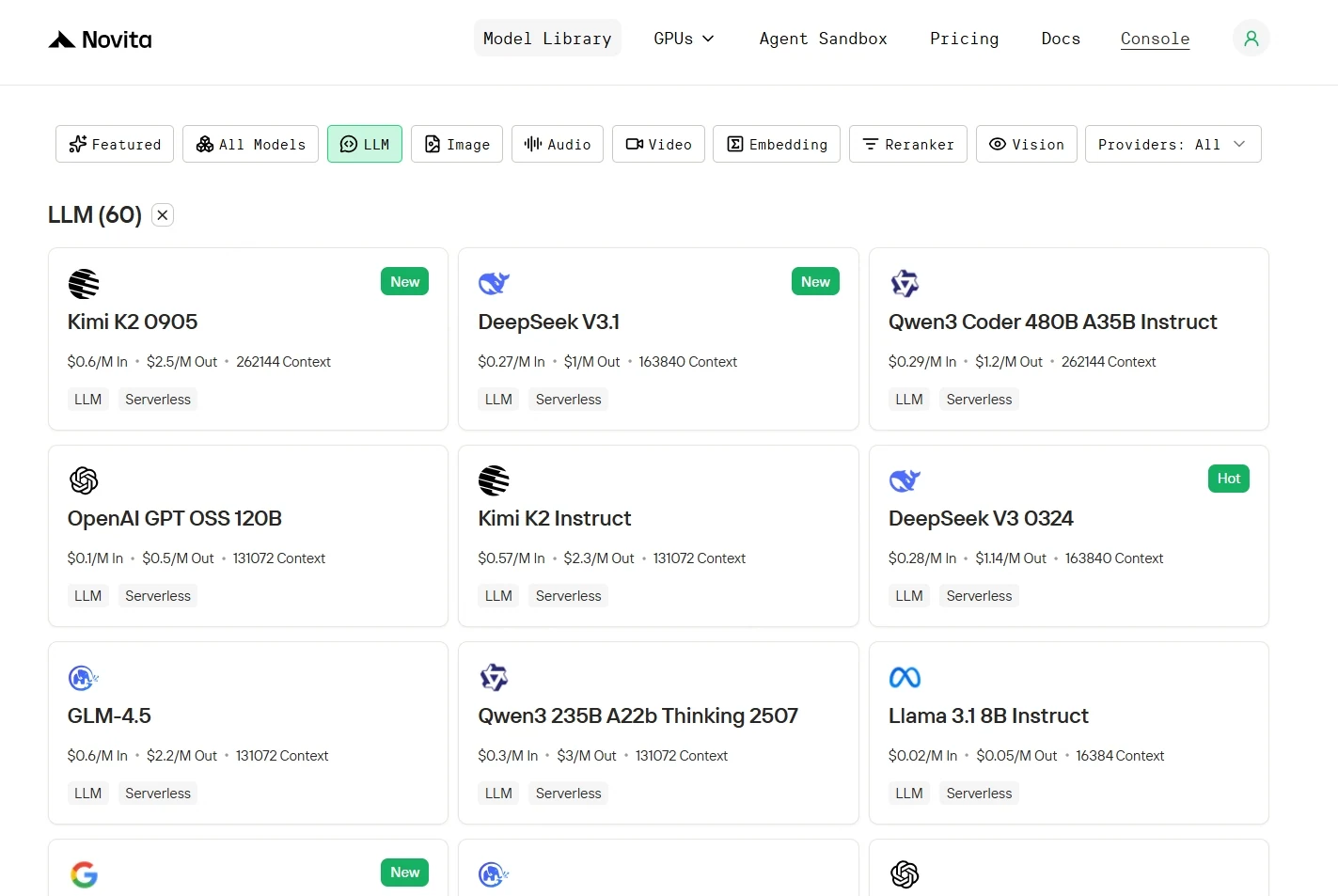
Step 2: Choose Your Model
Browse through the available options and select the model that suits your needs.
Step 3: Start Your Free Trial
Begin your free trial to explore the capabilities of the selected model.
Step 4: Get Your API Key
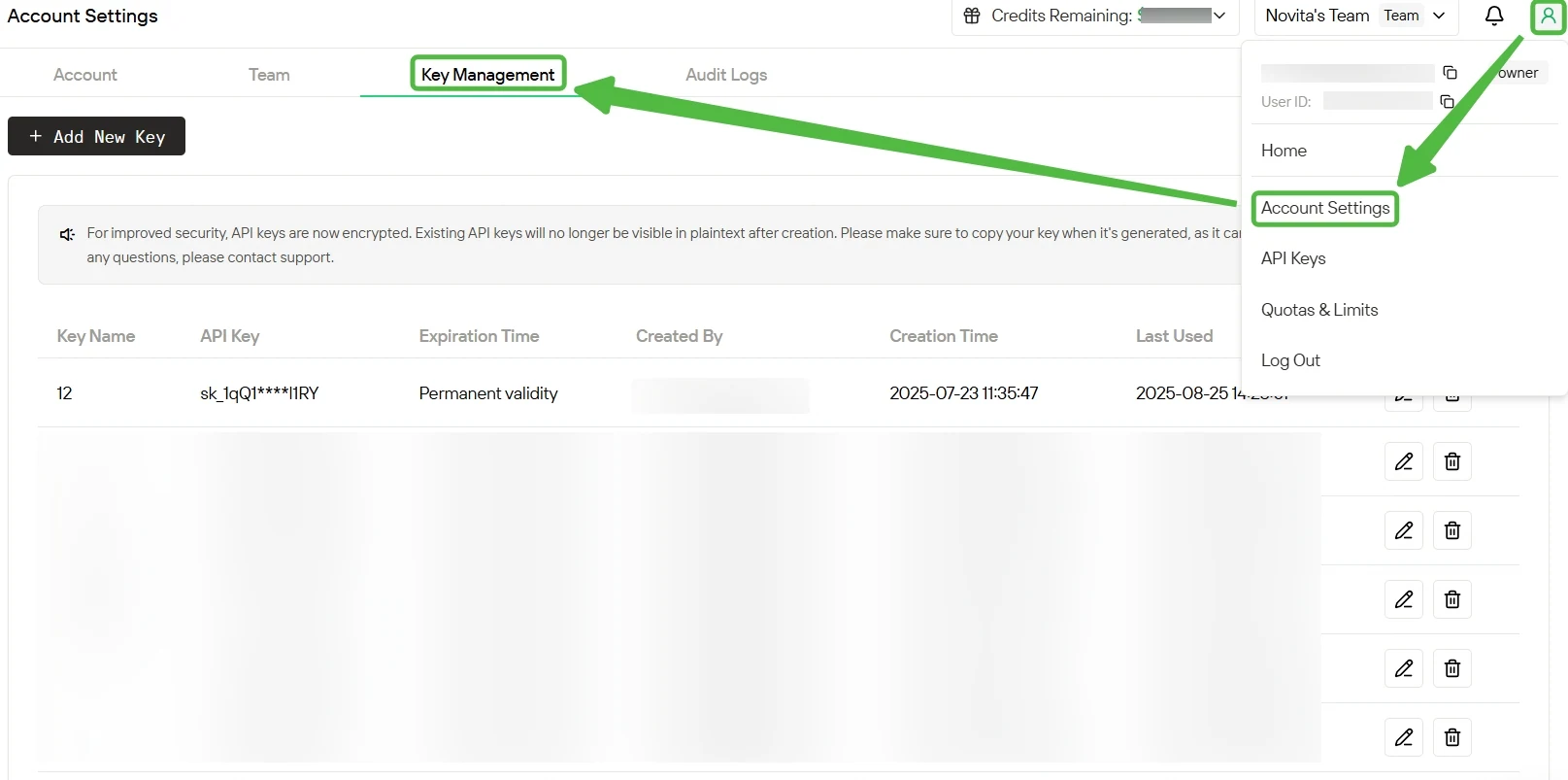
To authenticate with the API, we will provide you with a new API key. Entering the “Account Settings” page, you can copy the API key as indicated in the image.
Frequently Asked Questions
What is the difference between a workflow and an agent?
Workflows follow predefined, rule-based steps designed by humans, while agents dynamically plan and decide their own actions based on context.
When should I use workflows or agents?
Use workflows when tasks are stable, repetitive, and compliance-driven. Use agents when problems are complex, dynamic, or require adaptive reasoning.
When to use APIs directly instead of pre-built workflow platforms?
When you need full control, easier debugging, and cost efficiency without hidden abstraction layers.
Novita AI is an AI cloud platform that offers developers an easy way to deploy AI models using our simple API, while also providing the affordable and reliable GPU cloud for building and scaling.