Novita AI was proud to serve as a sponsor of the Agentic AI Summit 2026 at UC Berkeley. We were glad to meet everyone who visited our booth over the two-day event to ask questions and discuss where agentic AI is headed.
The summit reflects where the field is actually moving: from impressive demos toward systems that must run reliably, safely, and repeatedly at scale. For developers, however, the more important takeaway is not the event itself, but the set of problems that consistently surface once agents are put to real-world work.
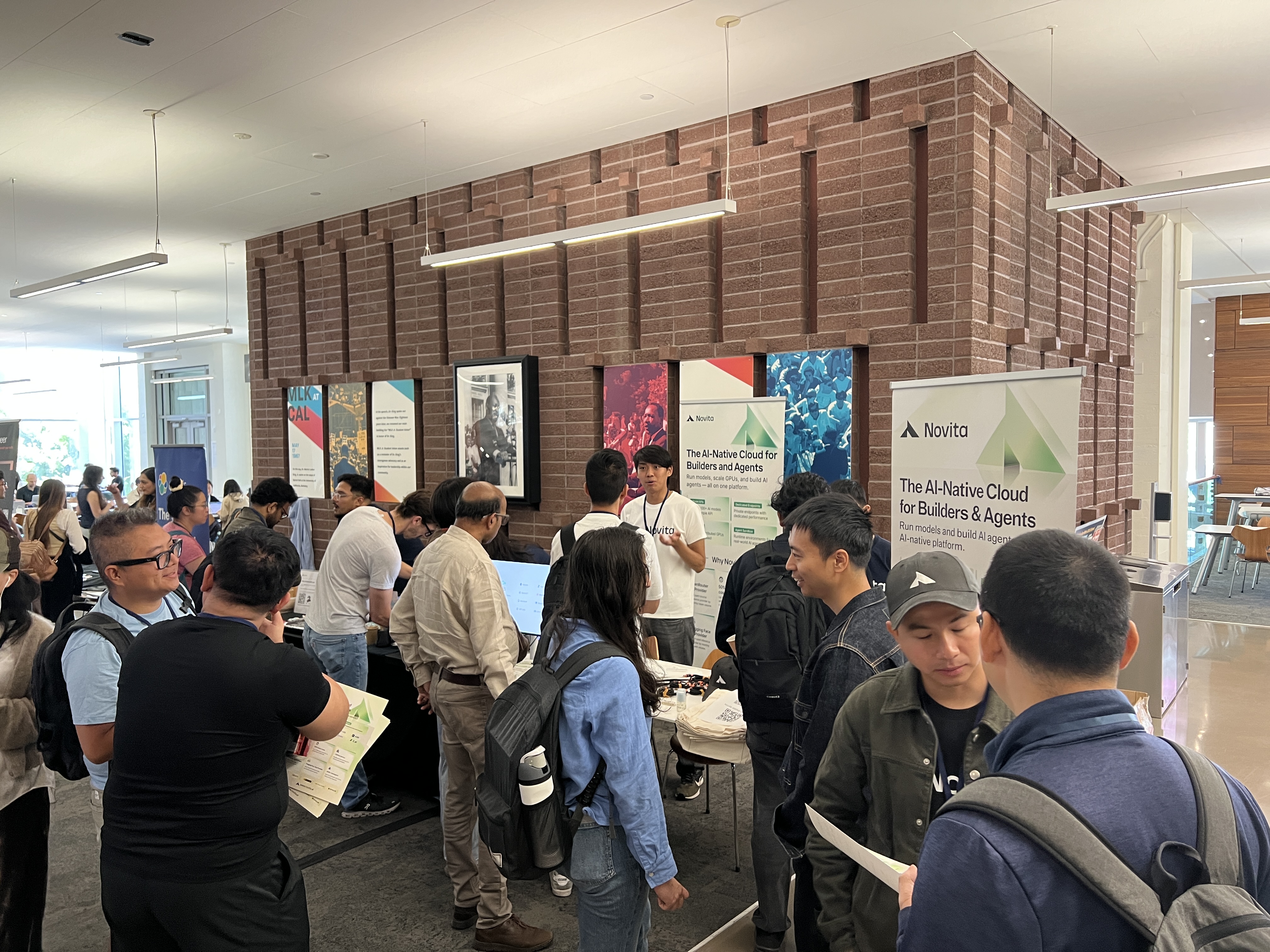
Caption: Novita AI at Agentic AI Summit 2026 in Berkeley
What Is Agentic AI Summit 2026?
The summit is a good signal for the current state of agentic AI: the conversation is no longer just about prompts and autonomy. It is about execution boundaries, tool use, product ergonomics, evaluation, and cost.
That matters because most agent failures are not model failures alone. They are system failures. Agents need permissions, state, retries, observability, and a place to run code safely. When those pieces are missing, the demo looks good and the workflow breaks.
Why Agentic AI Is Moving From Demos to Real Systems
The shift is simple: teams want agents that can ship work, not just talk about work.
That means builders now care about:
- tool boundaries and permissions
- secure execution for code and browser actions
- reproducible evals
- stable, OpenAI-compatible APIs
- inference cost per task, not cost per query
If your agent can plan well but cannot execute safely, it is not production-ready. If it can execute but you cannot trace, limit, or afford it, it still is not production-ready.
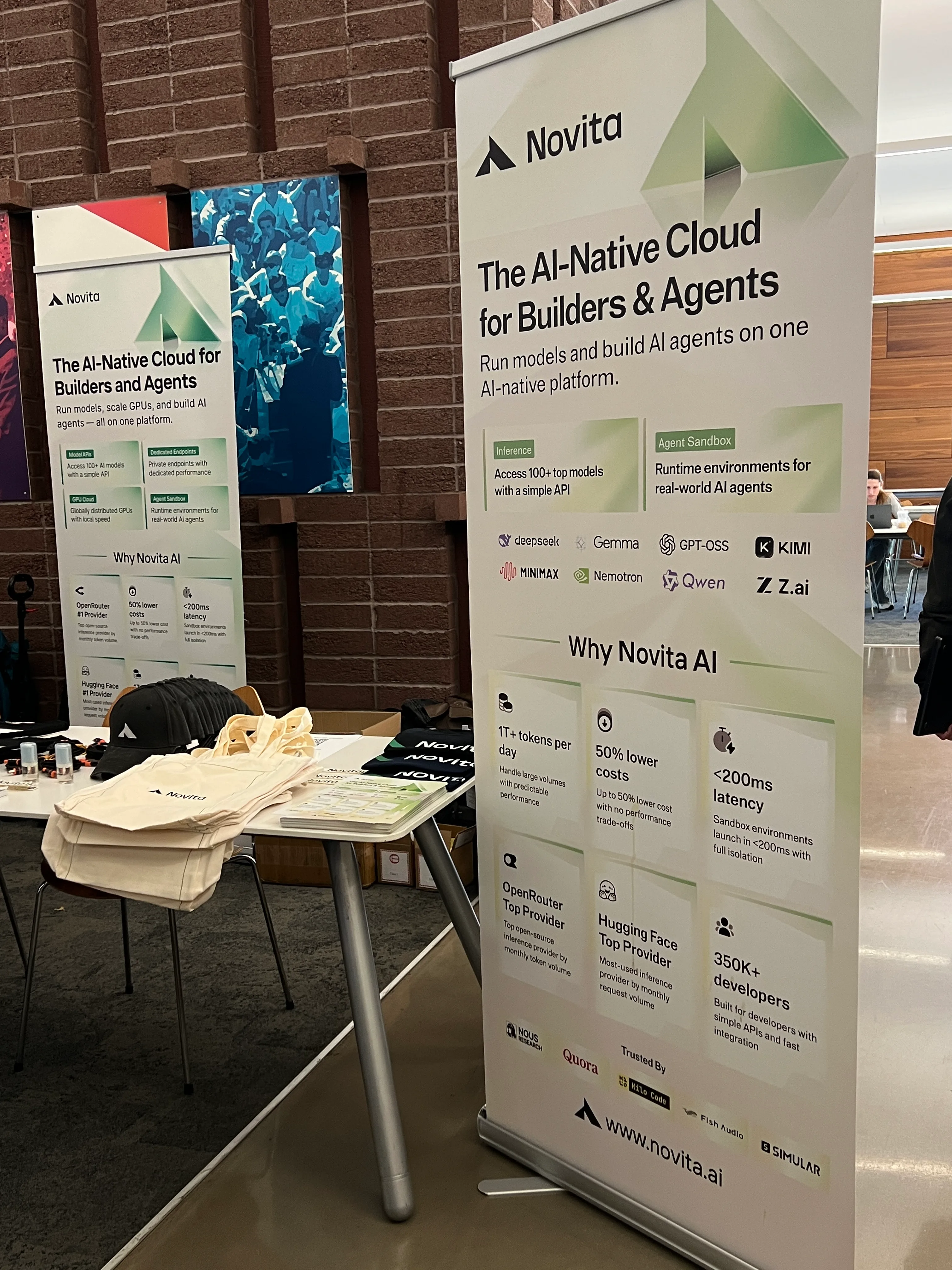
Caption: Novita AI showcased its AI-native cloud platform for builders and agents
5 Themes Developers Should Watch After Berkeley’s Agentic AI Summit
| Theme | Why it matters | What to do |
|---|---|---|
| Agent infrastructure | Agents need state, tools, and guardrails, not just prompts | Build the runtime first, then the model loop |
| Secure execution | Untrusted code and browser actions need isolation | Use a sandbox for anything with side effects |
| Open interfaces | Compatibility reduces migration cost | Prefer OpenAI-compatible APIs where possible |
| Observability | Agents fail in loops, not in one-off calls | Log tool calls, latency, and retries |
| Cost discipline | Multi-step agents multiply inference spend | Track cost per task, not just per request |
The big pattern is that agentic AI is becoming systems engineering.
What Students and Researchers Should Learn Now
If you are a student, focus on building one complete agent loop end to end: planning, tool use, execution, error recovery, and a measurable outcome.
If you are a researcher, focus on reproducibility and failure analysis. The useful questions are not only “does the model solve the task?” but also “what breaks when the environment changes?”
| Audience | Best next skill | Practical project |
|---|---|---|
| Students | Tool use and evals | Build a coding agent with a sandboxed workspace |
| Researchers | Reproducibility | Benchmark the same agent across different runtimes |
| Builders | Reliability | Add logging, retries, and cost tracking to one workflow |
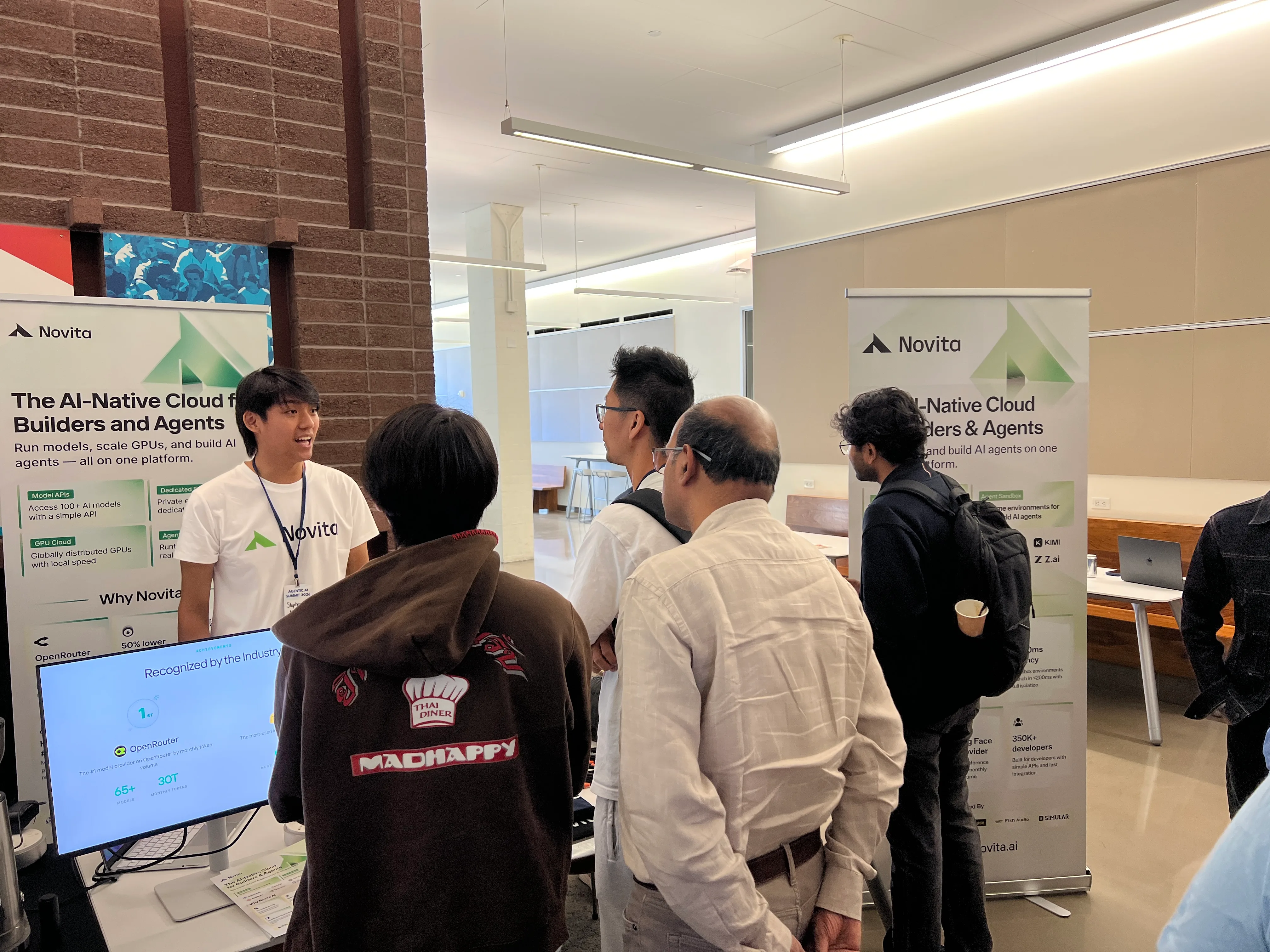
Caption: The Novita AI team spoke with developers, students, and researchers at the summit
How to Start Building AI Agents on Novita AI
Novita AI fits the stack well if you want to separate the reasoning layer from the execution layer.
Start with the LLM API docs. Novita AI’s APIs are OpenAI-compatible, and the docs show the same base_url swap pattern at https://api.novita.ai/openai for existing ChatCompletion and Completion clients.
from openai import OpenAI

client = OpenAI(
    base_url="https://api.novita.ai/openai",
    api_key="<Your API Key>",
)
Then pair that with Novita Agent Sandbox for execution. The official sandbox page positions it for coding agents, browser automation, computer use, evals, and long-running workflows, with sub-second startup and per-second pricing.
That split is the key architectural idea:
- use the LLM API for reasoning
- use the sandbox for side effects
- keep both observable
- keep both cheap enough to iterate on
If you are building agents for developers, students, or researchers, that is the stack that survives contact with reality.
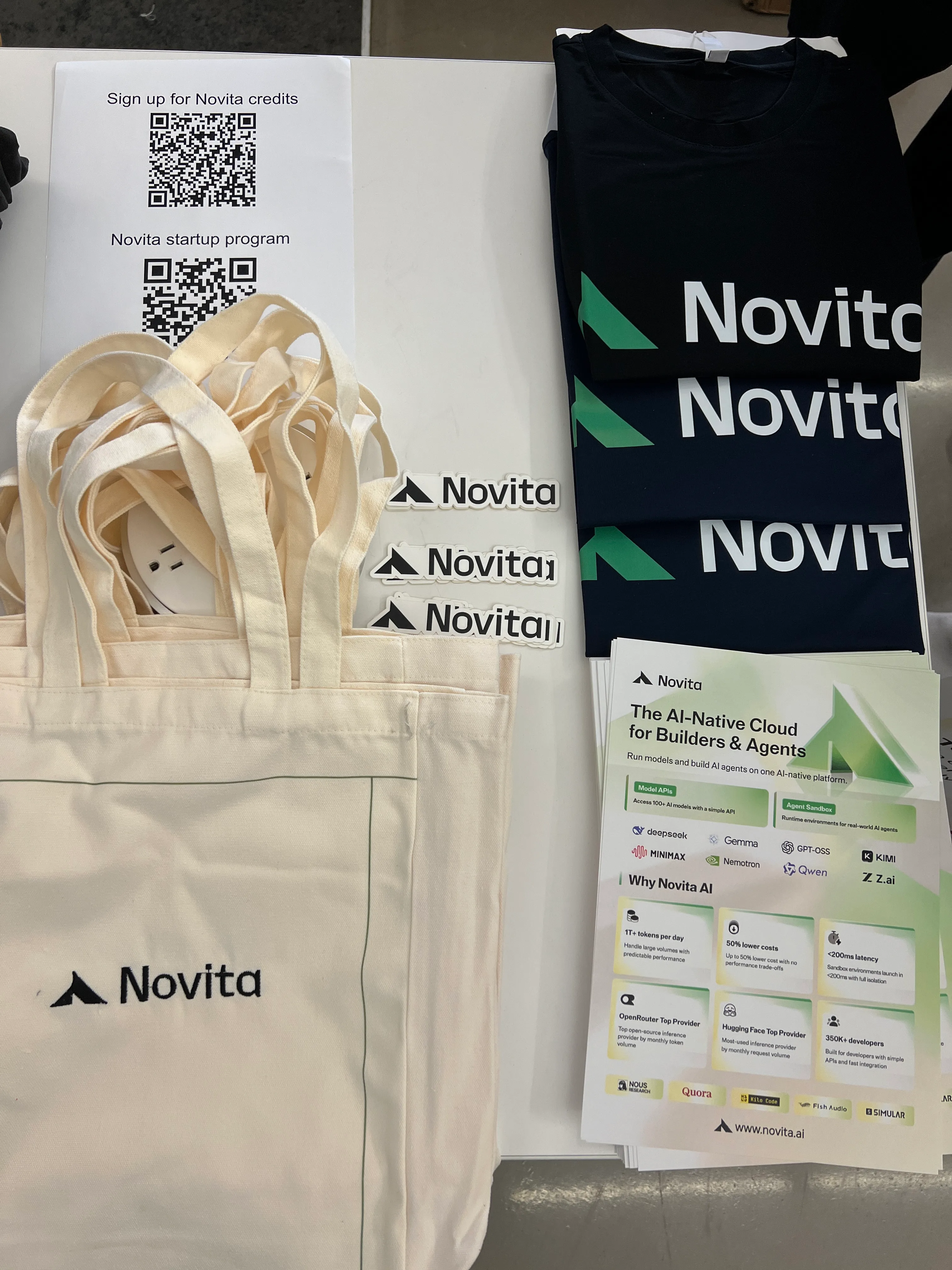
Caption: Novita AI credits, startup program materials, and booth handouts at the summit
Conclusion
Berkeley’s summit is a reminder that agentic AI is no longer just about capability. It is about execution quality. The teams that win will be the ones that treat agents as production systems: isolated, observable, interoperable, and affordable.
If you are building now, start with the model API, add a sandbox, and measure the full task path.
If your first agent project is Python-heavy, compare Best AI for Coding Python in 2026 before you lock in the model layer.
FAQ
What is the main takeaway from Berkeley’s Agentic AI Summit 2026?
That agentic AI is moving from demos to systems that need reliability, permissions, and safe execution.
Do I need a sandbox to build agents?
If your agent writes files, runs code, or uses browser/computer actions, yes.
Why use Novita AI for agent apps?
Because it gives you OpenAI-compatible model access plus a separate sandbox layer for execution.
What should I build first?
One end-to-end agent workflow with logging, retries, and a clear success metric.
Recommended Articles