In early 2025, as AI continues to transform industries across the globe, the hardware that powers these innovations remains a critical consideration for organizations. Despite newer GPU models entering the market, the NVIDIA A100 GPU continues to be a cornerstone technology for AI training workloads. This powerful GPU, built on the NVIDIA Ampere architecture, represents a significant advancement in computing capabilities that has enabled breakthroughs across numerous AI applications.
What is A100?
The NVIDIA A100 is a high-performance GPU designed for AI, data analytics, and high-performance computing (HPC) workloads, built on the NVIDIA Ampere architecture. It comes in multiple configurations, including PCIe and SXM form factors, with memory options of 40GB HBM2 or 80GB HBM2e, offering memory bandwidths of up to 2,039 GB/s. The A100 delivers exceptional computational power with 9.7 TFLOPS of FP64 performance, 19.5 TFLOPS of FP32, and up to 1,248 TOPS for INT8 tensor operations. Its third-generation Tensor Cores support advanced features like TF32 and sparsity, boosting AI training and inference efficiency. With Multi-Instance GPU (MIG) technology, the A100 can be partitioned into up to seven independent GPU instances, making it ideal for multi-tenant workloads. The A100 is available in both PCIe (250W-300W) and SXM (400W) variants, catering to diverse deployment needs in data centers and research environments.
| Specification | A100 40GB PCIe | A100 80GB PCIe | A100 40GB SXM | A100 80GB SXM |
| FP64 | 9.7 TFLOPS | 9.7 TFLOPS | 9.7 TFLOPS | 9.7 TFLOPS |
| FP64 Tensor Core | 19.5 TFLOPS | 19.5 TFLOPS | 19.5 TFLOPS | 19.5 TFLOPS |
| FP 32 | 19.5 TFLOPS | 19.5 TFLOPS | 19.5 TFLOPS | 19.5 TFLOPS |
| FP32 Tensor Float32 (TF32) | 156 TFLOPS | 156 TFLOPS | 312 TFLOPS | 312 TFLOPS |
| BFLOAT16 Tensor Core | 312 TFLOPS | 312TFLOPS | 624 TFLOPS | 624 TFLOPS |
| FP16 Tensor Core | 312 TFLOPS | 312 TFLOPS | 624 TFLOPS | 624 TFLOPS |
| INT8 Tensor Core | 624 TOPS | 624 TOPS | 1248 TOPS | 1248 TOPS |
| GPU Memory | 40GB HBM2 | 80GB HBM2e | 40GB HBM2 | 80GB HBM2e |
| GPU Memory Bandwidth | 1,555GB/s | 1,935GB/s | 1,555GB/s | 2,039GB/s |
| Max Thermal Design Power (TDP) | 250W | 300W | 400W | 400W |
| Multi-Instance GPU (MIG) | Up to 7 MIGs @ 5GB | Up to 7 MIGs @ 10GB | Up to 7 MIGs @ 5GB | Up to 7 MIGs @ 10GB |
| Form Factor | PCIe | PCIe | SXM | SXM |
Revolutionary Features Driving AI Training Performance
Multi-Instance GPU Technology
One of the A100’s most innovative features is Multi-Instance GPU (MIG) technology, which allows a single A100 GPU to be partitioned into up to seven independent GPU instances. Each instance operates with dedicated compute resources, L2 cache, and memory, providing complete isolation for workloads.
MIG enables:
- Optimal resource utilization with guaranteed quality of service
- Support for multi-tenant environments where multiple users or applications share GPU resources
- Flexible allocation with instances of varying sizes based on workload requirements
The A100 40GB supports up to 7 instances with 5GB memory each, while the 80GB model supports up to 7 instances with 10GB memory each, providing greater flexibility for resource allocation in complex AI training environments.
Structural Sparsity Support
The A100 introduces hardware-accelerated support for structural sparsity, a technique that takes advantage of the natural sparsity in deep learning models. By identifying and skipping unnecessary computations involving zero values, the A100 can effectively double the throughput for sparse workloads.
This capability is particularly valuable for large language models and other transformer-based architectures, where attention mechanisms naturally produce sparse activation patterns. By accelerating these operations, the A100 enables faster training of state-of-the-art models while maintaining accuracy.
Task Graph Acceleration
The A100 features improved asynchronous execution capabilities through task graph acceleration. This allows the GPU to efficiently manage complex deep learning workloads by optimizing the execution of interdependent operations. Task graphs represent the dependencies between operations in a neural network, and the A100’s architecture can execute these graphs with minimal CPU overhead.
By reducing the latency between operations and maximizing GPU utilization, task graph acceleration contributes significantly to training efficiency, especially for complex model architectures with numerous layers and branches.
Enhanced Memory Subsystem
Beyond raw bandwidth, the A100’s memory subsystem includes several enhancements that benefit AI training:
- Third-generation NVLink with up to 600 GB/s bidirectional bandwidth for multi-GPU configurations
- Improved caching architecture that optimizes data locality for deep learning workloads
- Hardware-accelerated atomic operations that improve parallel processing efficiency
These memory subsystem improvements collectively reduce the data movement bottlenecks that often limit AI training performance, allowing the computational units to operate at peak efficiency.
Practical Applications in Modern AI Ecosystems
Large Language Model Training
The A100 has established itself as a workhorse for training large language models (LLMs). Its combination of high memory capacity, exceptional memory bandwidth, and efficient tensor operations makes it particularly well-suited for the massive parameter counts and computational demands of modern LLMs.
For organizations training custom language models based on architectures like transformer-based models, the A100 offers an optimal balance of performance and cost. Its support for mixed precision training through TF32 and FP16 formats significantly accelerates training while maintaining model accuracy.
Computer Vision Workloads
Computer vision training workloads benefit substantially from the A100’s tensor core performance. Tasks such as image classification, object detection, segmentation, and generative image models require efficient processing of high-dimensional tensor data, precisely what the A100 was designed to excel at.
The INT8 precision capabilities are particularly valuable for computer vision inference, delivering up to 1248 TOPS in the SXM form factor. This exceptional integer performance enables rapid iteration on vision models and efficient deployment of trained systems.
Recommendation Systems and Data Analytics
Recommendation systems, which often combine deep learning with traditional data processing, benefit from the A100’s versatility. These systems typically process massive amounts of user interaction data to generate personalized recommendations, requiring both high memory bandwidth and efficient matrix operations.
The A100’s ability to handle mixed workloads efficiently—combining neural network components with data analytics operations—makes it particularly valuable for these hybrid applications that drive many modern online services.
Scientific Computing Applications
The A100’s exceptional FP64 performance makes it a powerful tool for scientific computing applications beyond traditional AI workloads. Computational fluid dynamics, molecular dynamics simulations, weather modeling, and other simulation-heavy disciplines benefit from the A100’s raw computational power.
The ability to leverage the same hardware platform for both scientific computing and AI training creates synergies for research organizations that work across these domains, allowing for more efficient resource utilization and simplified infrastructure management.
Strategic Advantages in Enterprise AI Deployment
Total Cost of Ownership Considerations
While newer GPU generations may offer incremental performance improvements, the A100 often presents a more favorable total cost of ownership (TCO) for many organizations. Factors contributing to this TCO advantage include:
- Mature ecosystem with optimized libraries and frameworks
- Established deployment patterns and best practices
- Widely available expertise for implementation and optimization
- Competitive pricing due to economies of scale and product maturity
For many AI workloads, the A100 hits a sweet spot where additional performance from newer generations comes at a disproportionate cost increase, making it the economically rational choice for production deployments.
Hybrid GPU Strategy Implementation
Many organizations implement hybrid GPU strategies, where different GPU types are deployed based on workload characteristics. The A100 excels as a foundational component in such strategies, particularly for training-intensive workloads.
A common pattern involves using A100s for model training and development, with inference workloads potentially handled by more specialized hardware. This division of labor allows organizations to optimize their infrastructure investments while maintaining high performance across the AI development lifecycle.
Scalability for Growing AI Workloads
The A100’s design emphasizes scalability across multiple dimensions:
- Vertical scaling through high-bandwidth NVLink connections for multi-GPU systems
- Horizontal scaling through optimized distributed training implementations
- Workload scaling through MIG technology for efficient resource utilization
This multi-faceted approach to scalability ensures that infrastructure based on A100 GPUs can grow organically with an organization’s AI ambitions, from initial experiments to production-scale deployments.
Software Ecosystem Maturity
Perhaps the A100’s most significant advantage is its position within NVIDIA’s mature software ecosystem. This ecosystem includes:
- CUDA libraries optimized specifically for Ampere architecture
- Deep learning frameworks with A100-specific optimizations
- NVIDIA NGC catalog providing pre-optimized containers
- Tools like NVIDIA NSight for performance profiling and optimization
This software ecosystem dramatically reduces the engineering effort required to achieve peak performance from A100 hardware, allowing teams to focus on model development rather than infrastructure optimization.
Novita AI: Premium A100 Cloud Service Provider
For organizations seeking to leverage the power of A100 GPUs without the capital expenditure of hardware ownership, cloud service providers like Novita AI offer flexible access to A100-powered computing resources. Novita AI specializes in providing premium A100 cloud services tailored specifically for AI training workloads.
To start using Novita AI’s premium A100 GPU services, follow these steps:
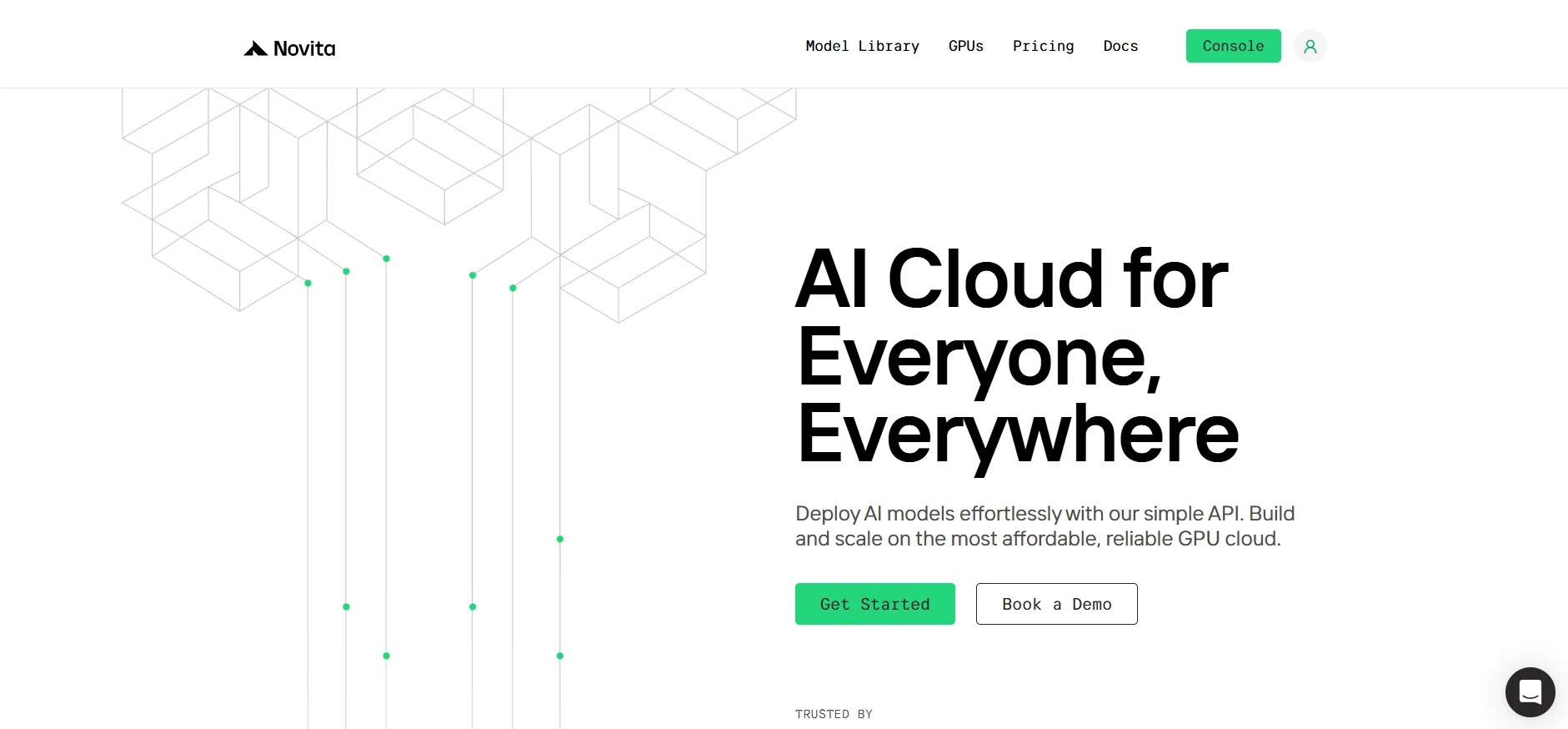
Step1:Register an account
Create your Novita AI account through our website. After registration, navigate to the “Explore” section in the left sidebar to view our GPU offerings and begin your AI development journey.
[Try using Novita AI now](https://novita.ai/?utm_source=blogs_GPU&utm_medium=article&utm_campaign=NVIDIA A100 GPU Performance: Why It’s Still the Go-to Choice for AI Training)
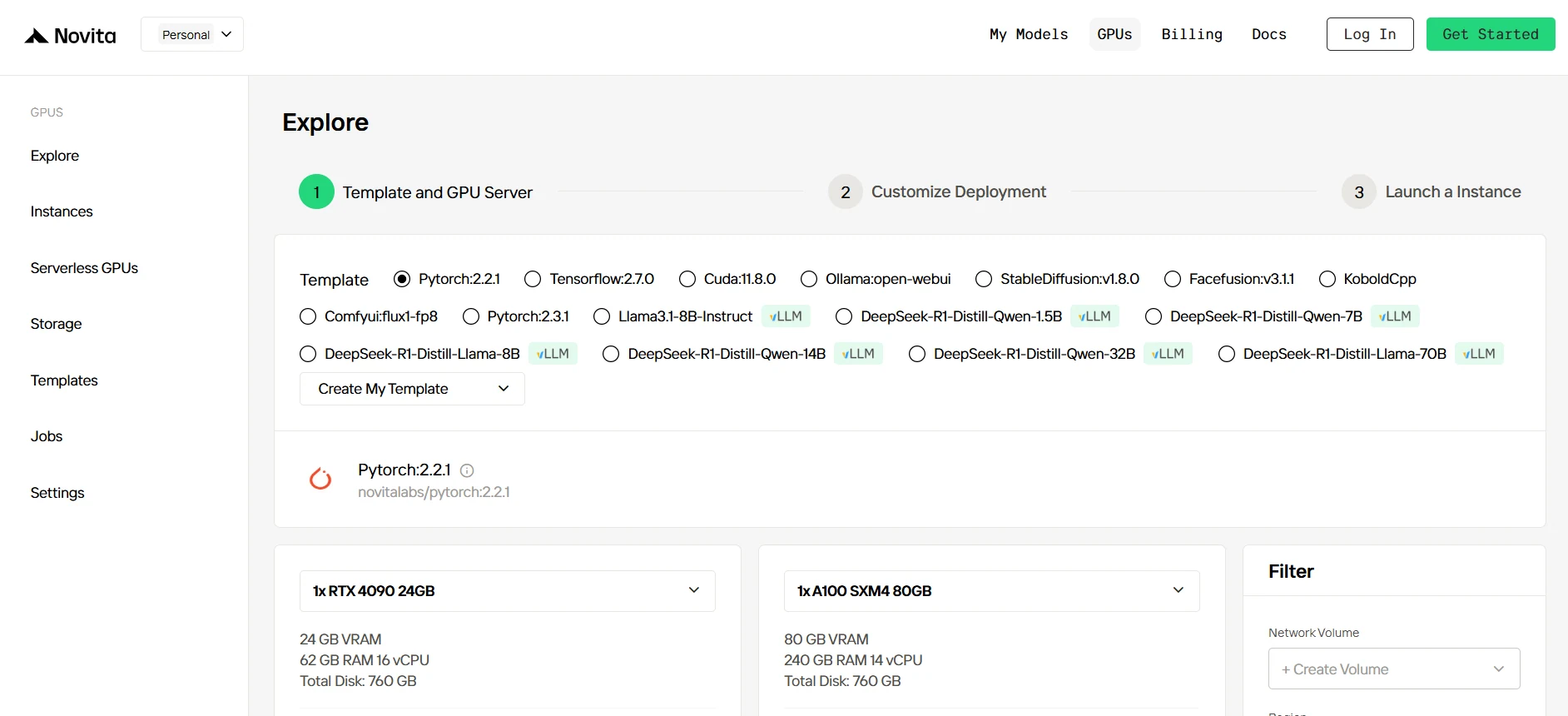
Step2:Exploring Templates and GPU Servers
Choose from templates like PyTorch, TensorFlow, or CUDA that match your project needs. Then select your preferred GPU configuration—options include the powerful RTX 4090 or A100 SXM4, each with different VRAM, RAM, and storage specifications.
[Try Novita AI’s High-Performance GPUs](https://novita.ai/gpus-console/?utm_source=blogs_GPU&utm_medium=article&utm_campaign=NVIDIA A100 GPU Performance: Why It’s Still the Go-to Choice for AI Training)
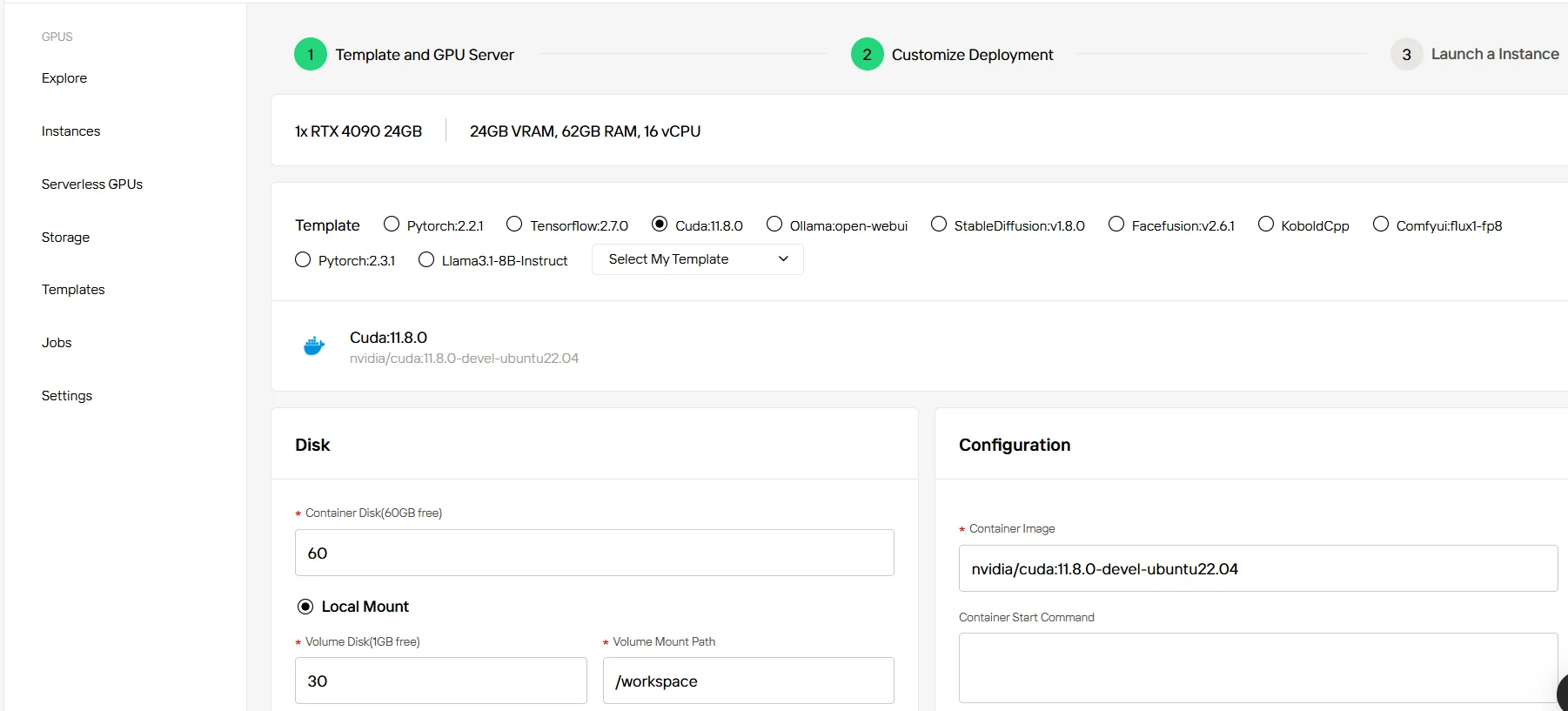
Step3:Tailor Your Deployment
Customize your environment by selecting your preferred operating system and configuration options to ensure optimal performance for your specific AI workloads and development needs.
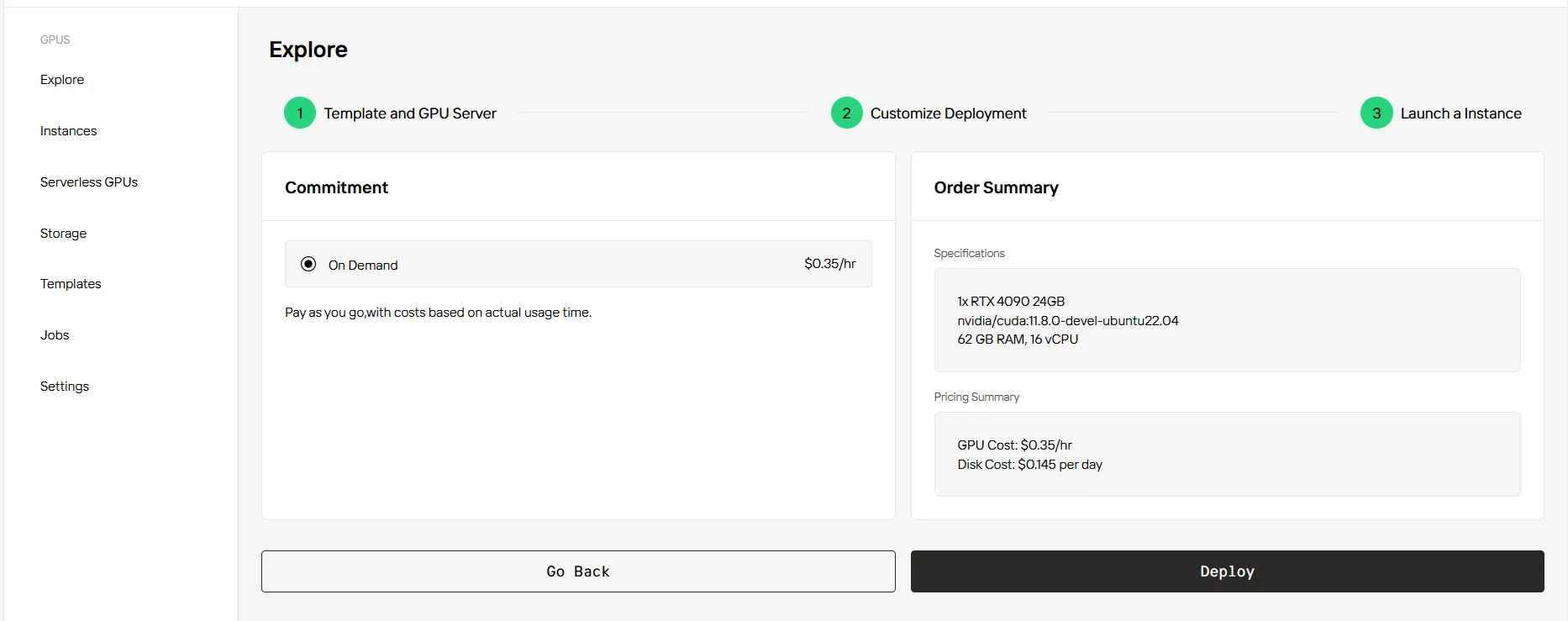
Step4:Launch an instance
Select “Launch Instance” to start your deployment. Your high-performance GPU environment will be ready within minutes, allowing you to immediately begin your machine learning, rendering, or computational projects.
Conclusion
In summary, the NVIDIA A100 GPU continues to be a cornerstone of AI infrastructure in 2025, offering a balanced combination of performance, efficiency, and cost-effectiveness. Its advanced architecture, revolutionary features, and mature ecosystem make it a versatile and reliable choice for organizations across various stages of AI adoption. While newer GPU models offer enhanced raw performance, the A100’s favorable economics, power efficiency, and proven reliability ensure its ongoing relevance in the AI computing landscape. Whether deployed on-premises or accessed through cloud providers like Novita AI, the A100 remains a practical and powerful tool for organizations serious about AI development.
Frequently Asked Questions
What makes A100 the preferred choice for AI training?
A100 features NVIDIA Ampere architecture with leading compute power (312 TFLOPS), 80GB HBM2e memory, and third-generation Tensor Cores. Its mature software ecosystem and optimized architecture make it a reliable solution for enterprise AI applications.
How should enterprises evaluate whether to upgrade to A100?
When considering an upgrade to A100, enterprises need to comprehensively assess their current workload scale and complexity, training time requirements, budget planning, and existing infrastructure expansion needs. They should also consider software ecosystem compatibility and long-term development strategy, conducting detailed cost-benefit analysis to determine if A100 can deliver significant performance improvements and business value.
Why can A100 support larger pre-trained models compared to consumer GPUs?
The A100’s 80GB memory capacity, combined with high memory bandwidth and NVLink interconnect technology, provides robust hardware foundation for large-scale model training. Its enterprise-grade memory management system and optimized drivers ensure stability and efficiency when handling large models, enabling training of larger deep learning models without heavy reliance on complex model parallelism strategies.
[Novita AI](https://novita.ai/?utm_source=blogs_GPU&utm_medium=article&utm_campaign=NVIDIA A100 GPU Performance: Why It’s Still the Go-to Choice for AI Training) is an AI cloud platform that offers developers an easy way to deploy AI models using our simple API, while also providing the affordable and reliable GPU cloud for building and scaling.
Recommended Reading
What is GPU Cloud: A Comprehensive Guide